
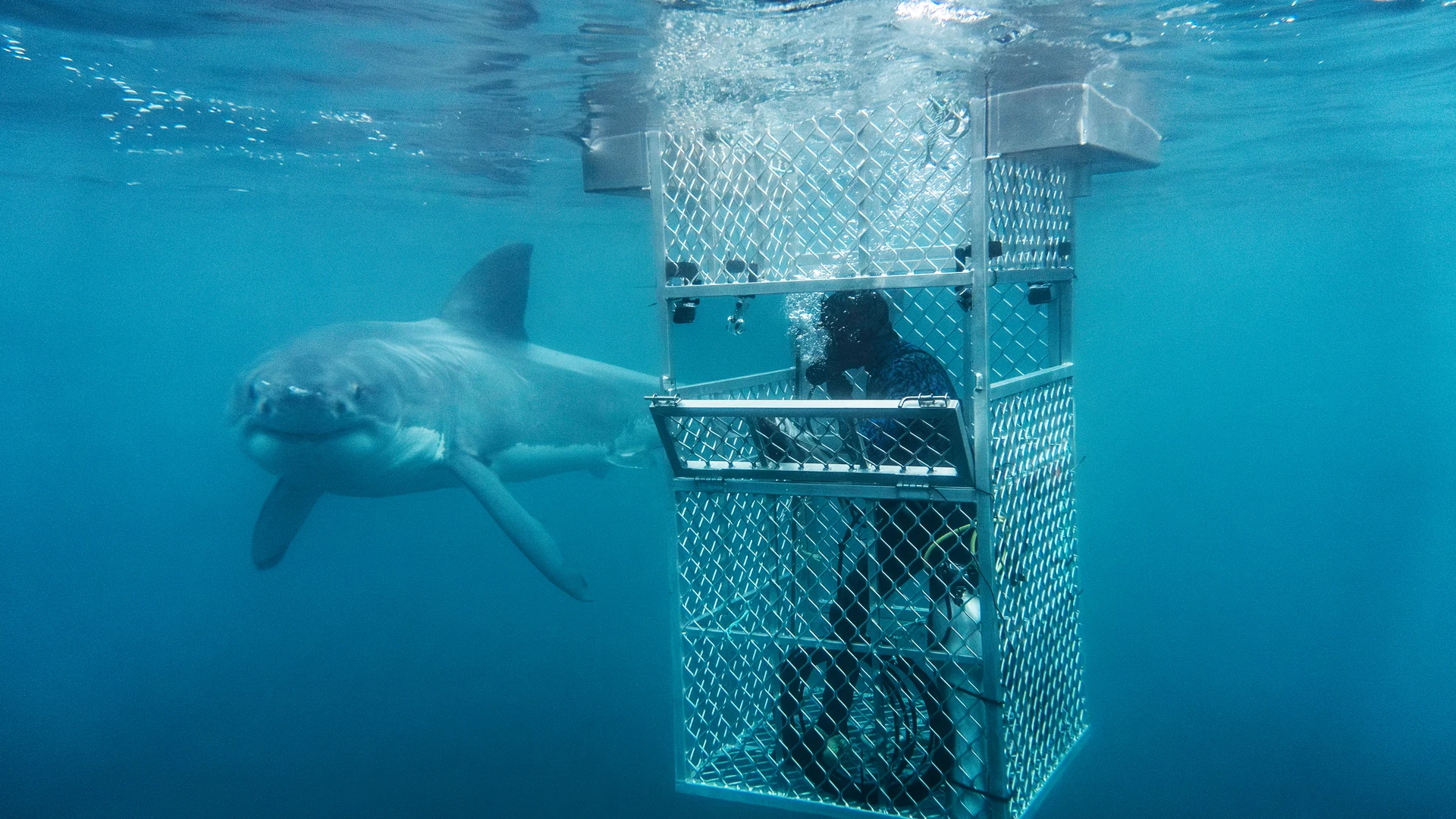
Local interest in a famous great white shark’s visit to Tasman waters has inspired a campaign to tag and name a shark of Nelson’s own.
Joe the great white went viral across the region after users of the Great White App noticed his unexpected arrival off d’Urville Island last week.
Joe is part of the Great White Project, a satellite-tagging programme led by New Zealand shark researcher Dr Riley Elliott.
The programme was initiated after a novel growth in baby great white sharks along the northern east coast of the North Island.
“I thought we should learn something about these animals,” says Riley, who specialises in shark behaviour and migration.
After securing a permit from the Department of Conservation to interact with the protected species, Riley travelled to Stewart Island in the summer of 2024 to begin tagging sharks and collecting small DNA samples.
Stewart Island is one of the few places in the world where great whites aggregate to hunt seals, socialise and mate.
During the first two tagging seasons, 32 adult great whites were tagged through sponsorship support. Every time a tagged shark’s dorsal fin breaks the water’s surface, a location is pinged via satellite.
Riley hopes to tag another 15 great whites this summer. Three sharks have already been sponsored, with each tag-and-track package costing $4300.
Richmond-based professional angler Troy Dando, who has spent his whole life on the water, saw the excitement generated by Joe’s appearance and thought it would be fitting for Nelson Tasman to sponsor, tag and name a shark for the region.
“There was a lot of interest when Joe the shark turned up in the area. Great whites have been in the bay forever in a day, but with tagging them you can see where they are,” says Troy, who has encountered more than a few sharks in his time on the water.
“I thought it would be quite cool to get one tagged and give it a name so that the Nelson community could track it and see it.
“Even from a safety point of view, not that they’re going to get attacked, but just to be more aware of the environment they’re in when we are in and on the water.”
Troy, who runs the Nelson Boating Community Facebook group, has launched a Givealittle campaign to raise the money needed to sponsor a shark. Supporters will also have the chance to help choose a name.
“We want to have a bit of a go at naming it, and then people can vote for their favourite name – it might be a name related to Nelson, or something else completely.”
He hopes local businesses will support the effort through donations or by contributing prizes for the naming competition.
“We don’t want to lose sight of the conservation side of this. The work that Riley is doing isn’t funded – it’s all out of people’s generosity.”
Riley says they have already learnt an incredible amount about the species during the past two years.
“Everything they do surprises us, to give perspective - we’ve only studied them once in New Zealand history.”
A decade-long joint NIWA and DOC tagging programme saw around 50 tagged up until 2015.
“We learnt an incredible amount about them, then we haven’t done anything since,” Riley says. “This is an animal that spans sub-Antarctic islands all the way to the Equator.”
Riley says sharks play a crucial role in maintaining healthy marine ecosystems.
“Any apex predator puts predation pressure on animals below them, it keeps everybody in check. We’ve seen it in South Africa - when they disappeared, the seal population exploded, they weren’t afraid anymore.”
From DNA samples already collected, Riley says the species faces risks from inbreeding and population decline. He estimates there are between 2000 and 5000 great whites left with only about 100 of 270 breeding adults mating regularly.
Riley says about 50 great whites are killed or caught across Australia and New Zealand each year, based on reported figures.
He hopes information gathered from the project will help improve protection for important shark habitats.
“For example, there’s one spot they all come every summer, and this one spot is obviously hugely important – Motunui/Edwards Island – you’d think it would be an area that is protected, but there is no protection.
“For a community like you guys in Nelson to come together and sponsor a shark, I think it’s so cool. It’s enabling for you, me and the sharks.”
To support the tagging of Nelson’s own shark, visit givealittle.co.nz/cause/help-us-tag-and-name-a-great-white-shark
To follow tracked sharks, download the Great White App or visit www.sustainableoceansociety.co.nz
