
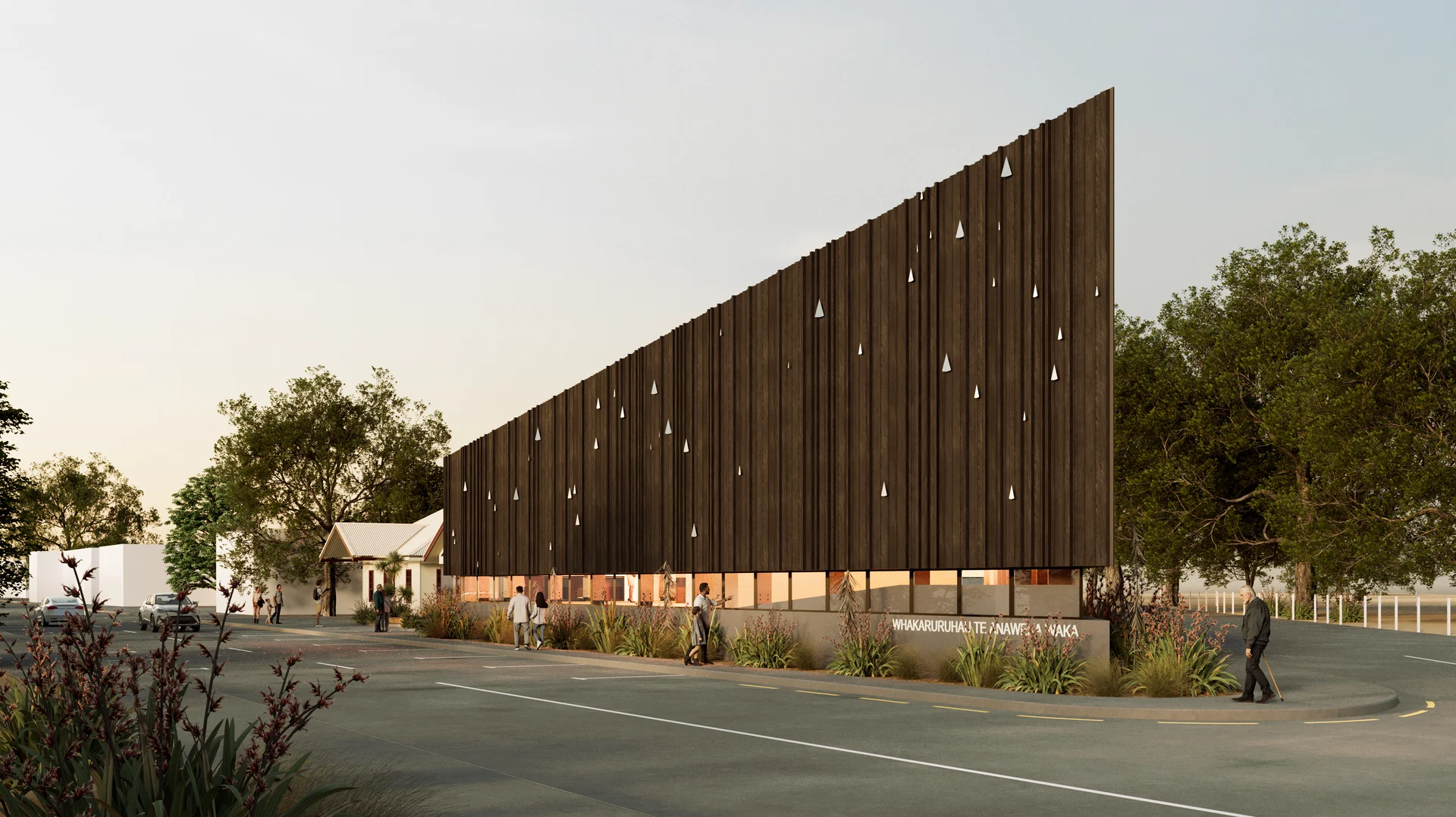
A Tākaka park has been confirmed as the future home for one of New Zealand’s most significant historical artefacts.
On Thursday, the Tasman District Council unanimously gave its approval for a new facility to be built on the town’s Pioneer Park in which the Anaweka waka will be housed.
Found 14 years ago at Anaweka, on Golden Bay’s west coast, the waka fragment has since undergone a lengthy preservation process.
Preparations are now underway to design and construct a purpose-built home for the artefact – a wharewaka.
Chris Hill, the spokesperson for the Anaweka waka project group, said the council decision was “very pleasing”.
“It’s a significant milestone… for the project. Now that that’s come to pass, it opens the way for the next steps,” she said.
“Some things have had to wait until this decision. So, we appreciate we’re able now to just make further progress.”
A consent application was now expected to be lodged by the end of August, and work was continuing to develop the organisational and governance structure for the wharewaka.
“There’s a lot of steps ahead of us yet… but we’re in good stead in terms of the people we’ve got working on the project are really accomplished, and that gives confidence in us being able to produce this facility,” Chris said.
The preferred site, approved by the council on Thursday, was 79–81 Commercial Street in Tākaka, the current site of Pioneer Park adjacent to the existing Golden Bay Museum.
Grant Knowles, chair of the Golden Bay Community Board, said it was “a very good move” that would serve as an additional “drawcard” for the area.
“The waka has to stay in Golden Bay, where it was found. It was a no-brainer.”
He did not think that a national museum, such as Wellington's Te Papa, would permanently have the waka on display, as it would be in the wharewaka.
“I think there’s a lot of positives going to spin off from this.”
Now that the site had been confirmed, the community board could begin preparing to relocate Pioneer Park’s memorial, sundial, and other amenities to an alternative location.
That site has yet to be decided, but Grant assured the community that they would be able to have their say on several options.
He added that the current park was underutilised and a hotspot for anti-social behaviour, and that the pioneers’ memorial would likely have a nicer, safer home elsewhere.
The iwi-led Anaweka waka project group is expected to fund the wharewaka in its entirety, including the relocation of items from the park and any alterations to the Golden Bay Museum, as the two facilities look to synergise.
“This is not a council expense. It’s not going to take up people’s rates,” reassured Golden Bay councillor Celia Butler.
The land would be leased from the council for 33 years at a rate in line with its still-in-development community leasing policy.
Should the project not proceed, neither would the lease.
Ultimate ownership of the wharewaka has not yet been decided, but if the model involved the council, that decision would be made as part of next year’s long-term plan considerations, and subject to further due diligence.
About three quarters of submitters favoured building a wharewaka in Tākaka, with two thirds supportive of the Pioneer Park site.
Pioneer Park is classified for cultural heritage use, which was in keeping with the wharewaka proposal.