
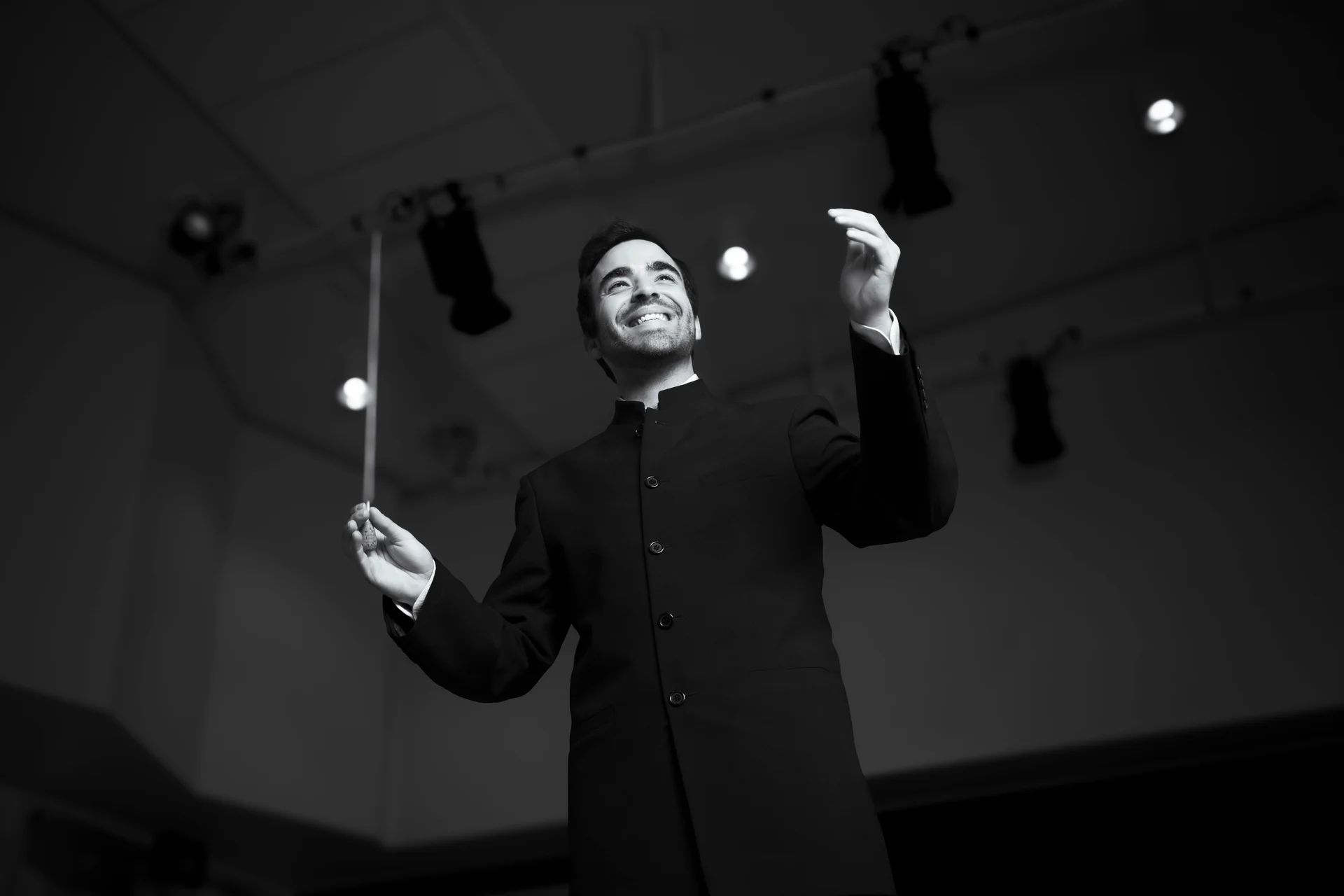
Rising conductor and multi-instrumentalist Lior Balachness is a musical powerhouse with roots now firmly planted in Nelson.
Words: Catherine Milford | Photos: Tessa Claus
Conductor, oboist, vocal coach and pianist Lior Balachness has conducted and assisted with orchestras across the world. Currently a 2025-2026 Conducting Fellow with the New Zealand Symphony Orchestra, and a Visiting Fellow at the New Zealand School of Music (NZSM), he has worked with distinguished conductors and orchestras in Israel and throughout Europe.
In New Zealand, he has assisted internationally acclaimed conductor Maestro James Judd in conducting Mozart’s Figaro with New Zealand Opera, and Maestro Marc Taddei conducting Mahler’s Symphony No.2 with the Dunedin Symphony Orchestra. In November he will travel to Sydney to observe leading Australian conductor Simone Young rehearse with the Sydney Symphony Orchestra, and he is currently in discussions for conducting placements around the country. But for Lior, home is where the heart is – and that’s right here in Nelson.
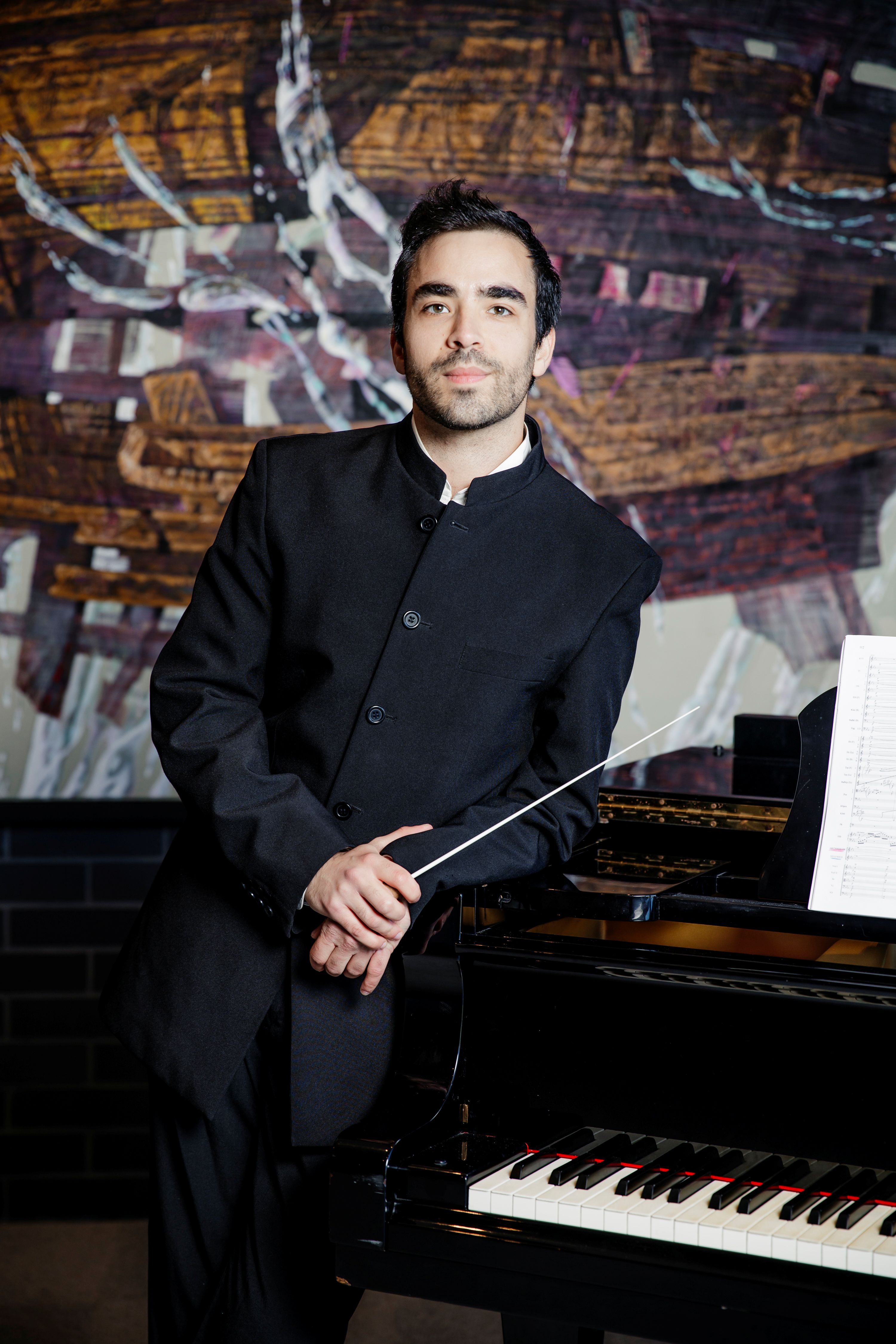
“I moved to New Zealand from Israel two and a half years ago after graduating from the Buchmann-Mehta School of Music in Tel Aviv, to take my Master's in Conducting and Composition at NZSM in Wellington,” explains Lior, 25, who lives in Māpua with his partner Jesse, a chef. “Jesse has lived here for the past few years, and I visited Nelson a few times while I was studying and loved it.
“We both love the natural calm and serenity of Nelson and Tasman – being able to see mountains on one side and the ocean on the other is wonderful. It’s so easy to travel around the country from here, and it’s a beautiful place to live.”
Originally born in the Ukraine and adopted by an Israeli family, Lior grew up in Israel and Europe. “It’s funny though – my birth certificate, which is in Russian, seems to hint that at least one of my birth parents is from New Zealand,” he tells. “Then the connection grew, as my uncle married a Kiwi girl, and everyone on my mum’s side is now Kiwi, living around the South Island.”
Nelson’s thriving music scene is a huge draw for Lior, who began learning music in primary school. “A friend was learning to play drums and that sounded great to me so I did it too!” he laughs. “A couple of years later, the Israeli youth orchestra in Haifa was short of percussionists so I got to join them when I was quite young – about eight or nine – and when I saw what the conductor did, I fell completely in love with it.”
Conducting is a complex skill that takes years to build, and Lior has spent years mastering the art. “When I first asked about it, I kept being told that I was too young to conduct, so I started writing musical arrangements so I could conduct those,” he smiles.
But Lior wasn’t about to give up his dream of becoming a professional conductor. He joined the Youth Israel Philharmonic Orchestra aged 13 as a percussionist, and after several knockbacks, eventually found himself a conducting teacher who was prepared to teach him.
“The people who told me I was too young were right – there’s so much theory needed to become a conductor,” he says. “Then I found this very old Russian guy called Yuri in Ramat Gan, just east of Tel Aviv, who said he’d teach me, and I was so excited. I printed off a bunch of music, ready to conduct – and he took it off me, put it on the piano and said – ‘OK, play’. When I asked what he meant, he told me he could teach me how to wave my arms in three lessons, but I needed to learn the essence of music.”
Lior’s teacher explained that conducting requires a lot of training, including score study, ear training, musicology, research, and understanding analysis – which would be learned from a piano, not a podium.
Each week, Lior was given a new piece of music to build his conducting toolbox. “He taught me music,” he says simply. “We worked a bit on conducting technique, but he’d make me sing in German, and gave me different pieces – operas and symphonies - to play on the piano each lesson. I never knew what I’d be playing beforehand.”
Under Yuri’s tutelage, Lior learned how to analyse the music of great composers like Beethoven, Bach, Haydn, Mozart and Wagner. “Strauss was the last composer I learned with him before he passed away,” he recalls.
Lior continued to learn various musical instruments, including the oboe, and played in orchestras across Israel and Europe. His conducting break happened by chance when he was 15. “We were in Vienna on vacation, when a friend asked me if I could help out with some oboe playing as their player was sick,” he says. “They were playing Wagner’s musical drama Tristan and Isolde, and part of the project was to play in Bayreuth in south Germany.
“It was the most amazing experience, and at the end of it, the conductor asked me if I’d be interested in doing some more projects with them. I told him I loved opera, played piano and was studying to become an opera conductor, and he allowed me to gain practical experience in front of players.”
At the Buchmann-Mehta School of Music, Lior refined his conducting skills under Israeli conductor and composer Yi-An Xu. “Conducting is an art that needs to be studied like any instrument,” explains Lior. “It’s not just about the music – it’s also how you present yourself on stage, your body language, social skills, how clearly you can explain yourself to the orchestra, managing the politics of the orchestra.
“It’s so important to be prepared when you conduct. Any musician who’s ever played in an orchestra will tell you that they’ve had conductors who don’t communicate, or understand the human interaction needed with an orchestra. Reacting to how they are playing, how they work, is so important to get the best out of that orchestra, musically and personally.”
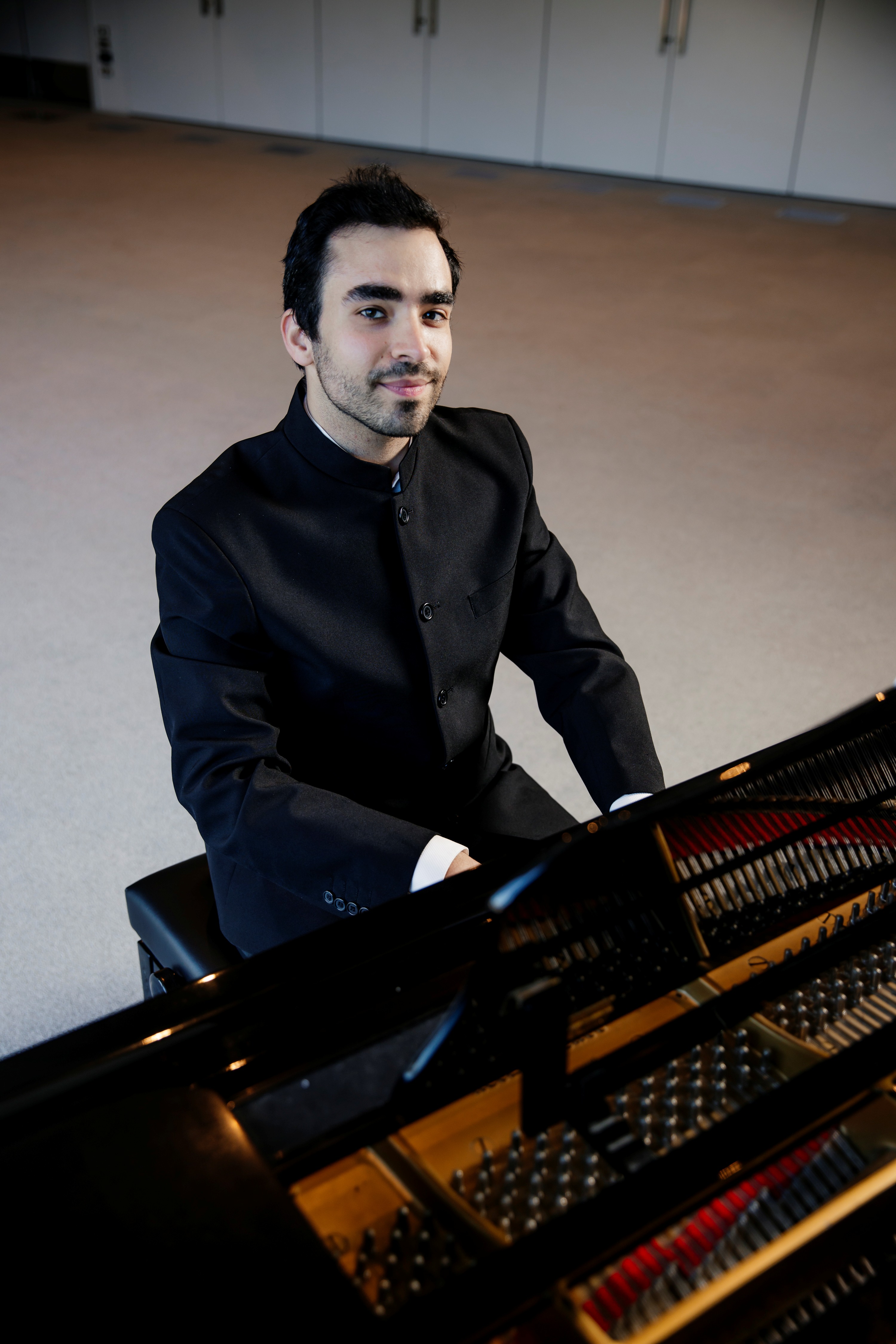
Lior is so passionate about the importance of conductor training that he’s looking at trying to establish a conducting programme here. “There is no formal conducting training in New Zealand which I think takes away the importance of learning the skill. I was the first person to study it at NZSM in eight years,” he tells. “New Zealand is a small country, but there are so many opportunities we can take here to encourage young musicians to learn how to conduct.”
Although he’s only been in Nelson for a couple of months, Lior is already looking at more ways to bring more music options to the region. “Opera is my niche, and I’d love to do a small-scale opera company here, or initiate a musical theatre company,” he says. “I want to connect with the music scene here, and hopefully do some conducting with the Nelson Symphony Orchestra. There is a huge talent pool here, and I’d love to look at developing players, and ways we can collaborate with other regions to grow our musical offerings.
“Nelson is a region that has so much to offer, and I’m very happy and excited to be here. Even if it may not seem like I have immediate roots, Nelson feels like home.”
