
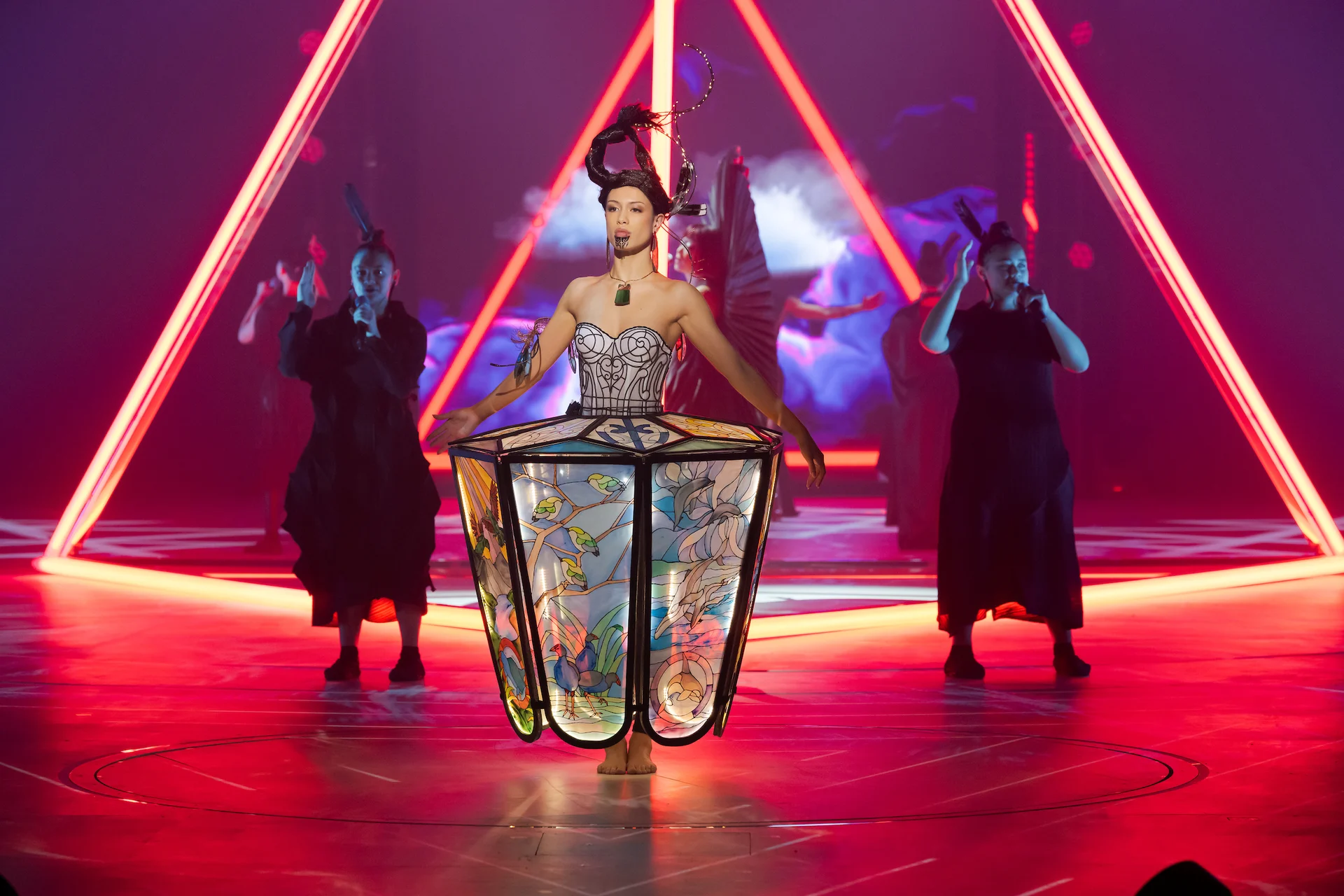
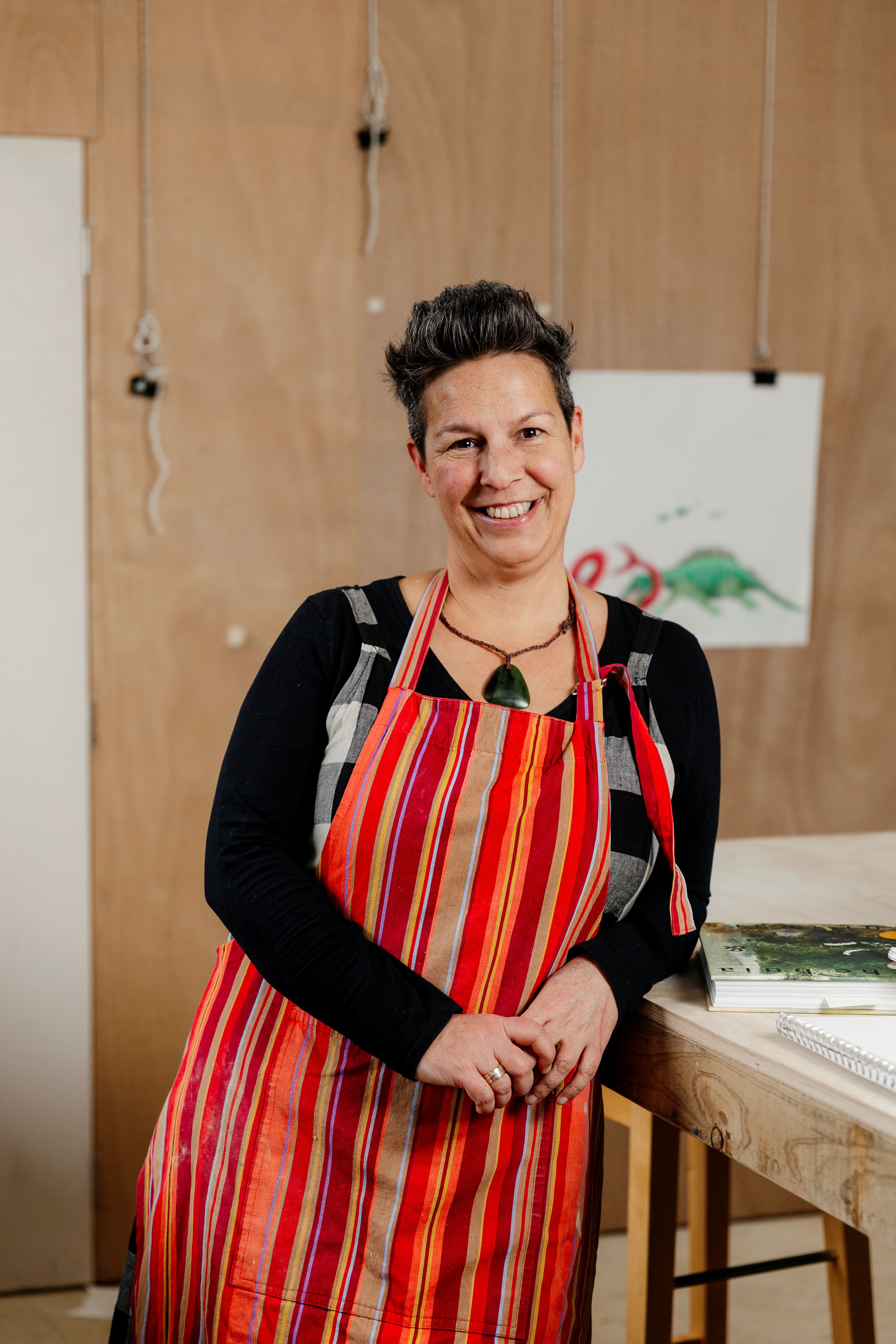
Now in its 39th year, the World of Wearable Art (WOW) has given thousands of designers and creatives an extraordinary platform on which to stretch their imaginations, master new skills and present their work to the world. The 2026 competition is truly international, with 108 finalists chosen to grace the stage from 18 countries. Nelson, where WOW began in 1987, continues to make its mark, producing imaginative entries worthy of the spectacular global stage. For Motueka High School Head of Art, Lauren Kidd, Ngati Toa Rangatira, wearable art is a glorious creative obsession. More than two decades after her first World of Wearable Art entry, Lauren now creates alongside her sister Fran. Their illuminated 2024 design, Te Ao Mārama, won the People’s Choice Award and honoured the stained-glass work of their late father. This year, the sisters return with another light-filled creation. Adrienne Matthews caught up with her ahead of the show in which she is a finalist in.
Where did your wearable art journey begin?
I come from an extremely artistic family. I have three sisters, and our parents always encouraged us creatively. Dad was an artist who worked extensively in stained glass. Art was simply part of our lives. It is fair to say it is in our blood. My first entry into WOW was a Bizarre Bra inspired by breast cancer and made from welded medical instruments. My parents owned a company selling medical equipment, so the materials were a natural starting point. Later, when I was pregnant with my daughter, I created The Hidden Assassin, exploring the damage possums cause to native flora and fauna for which I received a third place in the Aotearoa section.
What appeals to you about wearable art?
I love the process. You begin with an idea. The challenge is then working out what materials will bring it to life and what techniques and objects never intended as clothing will create the effect you want. Working out how it will function is the fun part. That is probably what makes it so addictive.
How do you and Fran work together?
Fran has a wonderful conceptual brain and often comes up with the initial idea. I tend to experiment and work out how it could function practically. We send designs backwards and forwards, each changing or adding something. It becomes a circular process rather than one person designing and the other making. Fran will sometimes phone or send photographs, excited because she has thought of something new. I will say, “Yes, that’s a great idea. Let’s go with it.” That is why we work so well together. We bring different strengths, but both contribute to the concept, construction and problem-solving.
What inspired your last entry, Te Ao Mārama?
We had recently lost our father, and the piece was inspired by his stained-glass work and original designs. It became a very special project for us to create together. We developed the concept and built the lampshade-like skirt between us. The design went through many versions and changed almost completely from the original idea. At that stage Fran was living in Nelson, and for around six months we met most weekends to work on it. It gave us something meaningful to share while remembering Dad and celebrating his creativity.
Why do you think the audience responded so strongly?
The lighting was probably a major part of its appeal. When it lit up, the colours became incredibly striking. The design also had a strong Te Ao Māori influence, including Kōwhaiwhai-inspired patterning. People may not have known the complete story, but they responded to the colour, movement and cultural elements. Winning the People’s Choice Award was an enormous honour. It felt like the coolest award we could have received because it came from the audience.
Was creating it as magical as seeing it onstage?
Not always. I spent about three weeks painting the silk panels, only to discover that replacement silk I had ordered behaved completely differently from the original. The paint became patchy and would not hold properly. We had to start again, change the paint and remake every panel. It was heartbreaking. I cried. The bodice also took several attempts. Something might technically work, but that is not enough. It must look clean and professional while surviving dressing, movement and repeated handling.
Has your approach to creating entries changed?
My early entries were closer to arts and crafts. The ideas were there, but the sewing, structure and finish were not at the level needed now. Creating a WOW garment today feels more like an engineering project. I spend much longer experimenting and considering structure, weight, movement and balance. The standard is extraordinarily high. A garment must look wonderful, but it also has to be wearable, durable and practical backstage.
Did you immediately decide to enter again after your win?
On opening night in 2024, we looked at each other and said, “We are never doing this again.” The following day Fran announced, “I’ve got an idea.” I said, “No, you don’t.” Unfortunately, it was a very good idea. Within two weeks, we were back on the roller coaster. That garment is not this year’s entry. We reached about the halfway point but did not have time to complete two designs, so it has been saved for another year.
What can you reveal about this year’s creation?
Very little. We are not allowed to give away details. All I can say is that it is based on our children’s creativity. It is great fun, and we hope it will make people laugh. Because Fran now lives in Christchurch, creating it has required more planning. She has travelled to Nelson during holidays so we can complete major elements together in my studio. Between visits, we work on separate components. It looks relatively simple, but behind that simplicity lie months of thinking, testing and rebuilding.
What has WOW given you?
Recognition is wonderful, not only winning an award, but simply being selected. It validates the extraordinary amount of time, thought and creative energy involved. WOW has also pushed me to learn to weld, use an industrial sewing machine, draft patterns, weave, make stained glass and understand basic electrical systems. This year, I will take a group of textile students to see the dress rehearsal. Watching young people from a small town experience a production of that scale will be wonderful. My advice to anyone considering entering is to go for it. Begin with an intriguing, meaningful idea. Techniques can be learned. Once a concept captures your imagination, you can find a way to make it real. Experimentation is the key. Kia kaha.
World of WerableArt, 17 Sept - 4 Oct 2026, TSB Arena, Wellington
