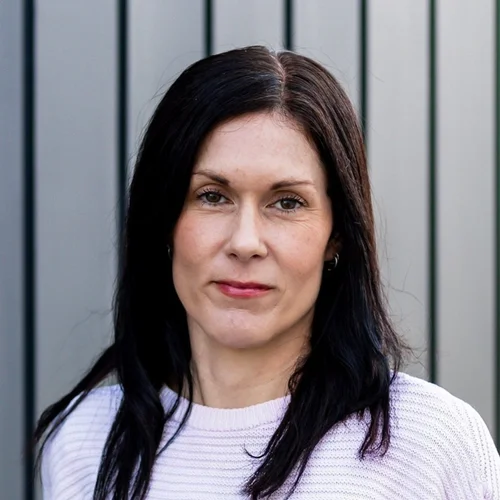

A terminal bowel cancer diagnosis at 45 has given Nelson man Antony Oliver a new mission: convincing more people in their 40s and 50s to get tested before it’s too late. Now living with advanced cancer, he shares his story with Kate Russell in the hopes it could help save lives.
Antony Oliver has no shortage of things he could be doing with his time.
The 48-year-old Nelson man is still fixing cars, painting kitchen cabinets, playing golf and tackling DIY jobs when he can.
But his biggest project now is something much more personal: getting people to take bowel cancer seriously and encouraging younger people to get tested before it is too late.
Antony was 45 when he was diagnosed with colorectal cancer in 2023. By then, it was already advanced.
Now terminally ill, he wants to use his experience to raise awareness of the symptoms and the changing age profile of bowel cancer.
“My new purpose is to raise the awareness of how common this type of cancer is… the symptoms, how the demographic has massively shifted to the 40-50 age group and how easily testing can be carried out.”
Antony and his partner Kerrie have two children, Charlie, 14, and Cory, 12. The family moved from the UK to New Zealand in 2019.
He had always been proactive at work and spent his career in transport and logistics, including driving trucks and branch managing for NZ Van Lines.
But when it came to his health, things were different.
He had experienced bowel problems since his late 20s and remembers having a colonoscopy in his 20s during which polyps were removed. He put later symptoms down to stress, certain food and drink, and simply getting older.
While truck driving, he noticed increasing urgency when he needed to use the bathroom.
“It’s always been a sit-down job with long hours, so even if you needed the toilet 30 minutes into a four-and-a-half-hour drive, you just kind of held off.”
Then, in April 2023, he passed a bloody stool.
He went to the doctor and was told he had a pile. Like many people, Antony says he was considered “too young” to be a likely bowel cancer patient.
But after passing another bloody stool within two weeks, a different doctor referred him for a colonoscopy.
Antony was awake and watching the screen during the procedure.
“The chap that did the colonoscopy comes out with the camera, and when he got down towards the bottom, he just went, ‘Oh, now I see the problem’.
“And that’s when you get that that feeling of, ‘Well, it’s a good thing that we found something, but what have we found?’”
That was the beginning of what he describes as a “whirlwind” of treatment, hospital visits and appointments.
Further scans in Christchurch showed the cancer was already advanced. It had spread to his lung and through the colon wall into the lymphatic system, including multiple lymph nodes and the para-aortic lymph nodes.
He underwent chemotherapy and radiation before having the affected section of his colon and rectum removed just after Christmas 2023.
“It was pretty rough,” he says of chemotherapy, which often left him spending the following day at his computer with a bucket beside him.
He had a colostomy bag for seven or eight months before having it reversed.
The cancer continued to progress and recently spread to his spine and vertebrae. After long waits in ED with severe back pain, he eventually had an MRI and was sent to Christchurch for spinal surgery in July.
He is still in pain and often fatigued, but is trying to stay active. He has chosen not to have palliative chemotherapy for now.
“It kind of takes away a week, and then you get a week where you start to recover back to your ‘normalness’, whatever that is, and then you’re preparing for however rubbish you’re going to feel for the next week.
“Might as well have this slow progression towards crap than having that,” he quips.
Instead, he is focused on what he can do now.
He has researched a range of conventional and naturopathic treatments, including CBD oils, vitamin D, exercise, cold therapies and light therapies.
He has also become increasingly frustrated by what he sees as a gap in preventative care.
New Zealand’s national bowel screening programme offers screening every two years for people aged 56 to 74. Australia starts at 45 and the UK at 50.
Antony believes more people in their 40s and 50s should have access to testing.
He recently discovered TrueProactive, a private home-testing service providing FIT screening kits for less than $200, and encourages people to get one – as it could save your life.
Founder Dr Clive Price says that more than 4000 kits have been dispatched since the service started in February, identifying four bowel cancers in people without symptoms as well as numerous precancers.
Antony now wants to take his message into the community.
To get people talking, he had a street sign made with the help of LG Creative. He debuted it at the Nelson Saturday Market last week, where he shared his message with marketgoers. He plans to be back again.
He gave up work in February, which was difficult because work had been “his life”. But he is determined to make the most of the time he has.
“People have said to me that I’m positive, but actually, I just think I’m ignorant,” he quips. “I’m just a stubborn git.”
Antony hopes he can get through to at least one person.
“I want to tell the world; I want to make sure that everybody knows what’s going on. If I can save a life because they’ve done a test and they’ve caught it early, I’ll be happy.”
To follow Antony’s journey, go to cancerfighterantony on Facebook, or cancer_fighter_AntonyOliver on Instagram.
