
ELAINE FISHER
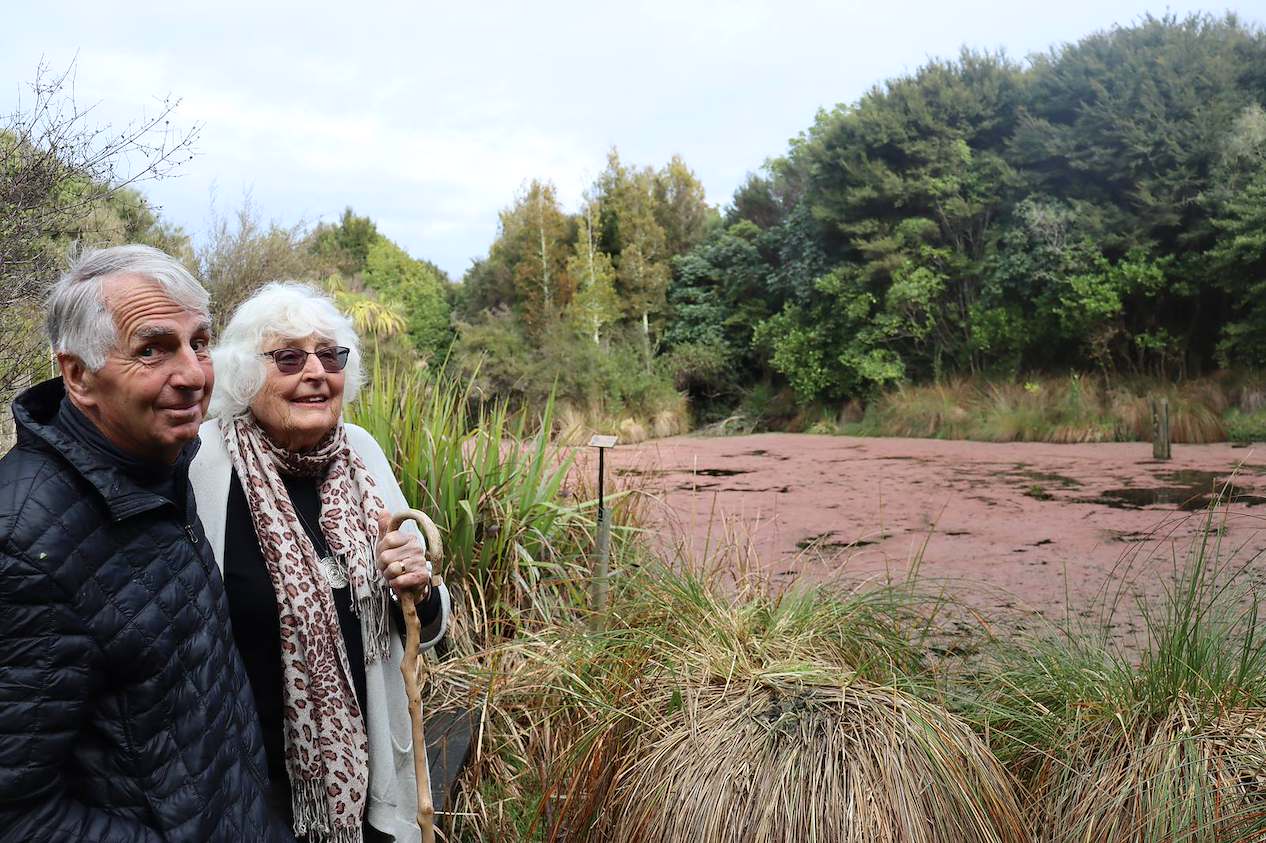
Twenty-one years on from the first plantings, Māpua Wetland, adjacent to Aranui Park, is a haven for threatened tree species and native birds but unfortunately, also for pest such as possums, rats, mice and hedgehogs which is why Māpua Dawn Chorus volunteer Hamish Ballantyne maintains a trap line there.
“I’m a tramper and enjoy the dawn chorus I hear on our Great Walks. I’d love to hear the same in Māpua which is why I like catching rats, mice and hedgehogs which threaten our native birds,” said Hamish.
The trap line is part of the on-going swamp forest re-creation project begun by the Beere/Mitchell families in 2005 on one hectare of private land that once carried a few house cows.
“It is part of the Seaton Valley Swamp which prior to European settlement was one of the largest wetlands in the Moutere and Motueka area,” says Judy Mitchell who with husband David, members of the Beere and Mitchell families and friends, are custodians of the wetland.
Hamish’s trapline within the wetland is just one of many operated by Māpua Dawn Chorus (MDC) in Aranui Park, Rabbit Island, Dawson Track, McKee Reserve, Mamaku Corridor, Ruby Bay and Walkway tracks. These traplines are supported by the many backyard traps in properties in Māpua Village and Ruby Bay together with surrounding lifestyle properties.
“We’d love to hear from anyone interested in maintaining a trapline,” said Clare Kininmonth of MDC which also encourages locals to set backyard traps for mice and rats and record their catches on Trap NZ.
Judy said the rapid loss of up to 90% of New Zealand’s wetlands and the important role they play as the “kidneys of the land" filtering, absorbing and taking harmful contaminants out of water before it reaches rivers, lakes, and estuaries were among the motivations for the re-planting of the Māpua Wetland.
“The area formerly contained a kahikatea forest as well as rimu, matai and other native trees and plants. Dozens of kahikatea have been planted and most are doing well, but as they take 120 years to mature it will be a long time until they dominate the canopy,” said Judy.
Since 2005, thousands of trees and swamp-loving plants have been planted by teams of volunteers, including many from Māpua Primary School, Māpua Scouts and local clubs.
These have included threatened species such as narrow-leaf maire tree, the baumea reed and carex geminate (cutty grass). Manuka, kanuka, hebe, kowhai, cabbage tree and many other natives have also been planted.
So rich are the peat soils within the wetland that QEII covenant status was granted in 2009 due to the exceptional growth of the native plants. The Tasman District Council also granted it Open Space Zoning, and the wetland, with two man-made ponds, complements Tane’s Ark in Aranui Park next door.
Public access to the Māpua Wetland is by permission from the Mitchell Family, because, says Judy, it is taking years to build up a secure understorey and so is not ready to cope with a lot of foot traffic.
Apart from pests trapping, the wetland still requires on-going maintenance including removing invasive plants like blackberry, convolvulus, Japanese honeysuckle and banana passionfruit. Extreme weather events such as heavy rain and heat and drought in summer are also challenges.
Judy and David Mitchell know they will never see the kahikatea they planted reach maturity, but they take pleasure in watching the wetland plants reclaim the swamp and Hamish takes satisfaction in controlling pests, making the environment safer for birds and insects.
