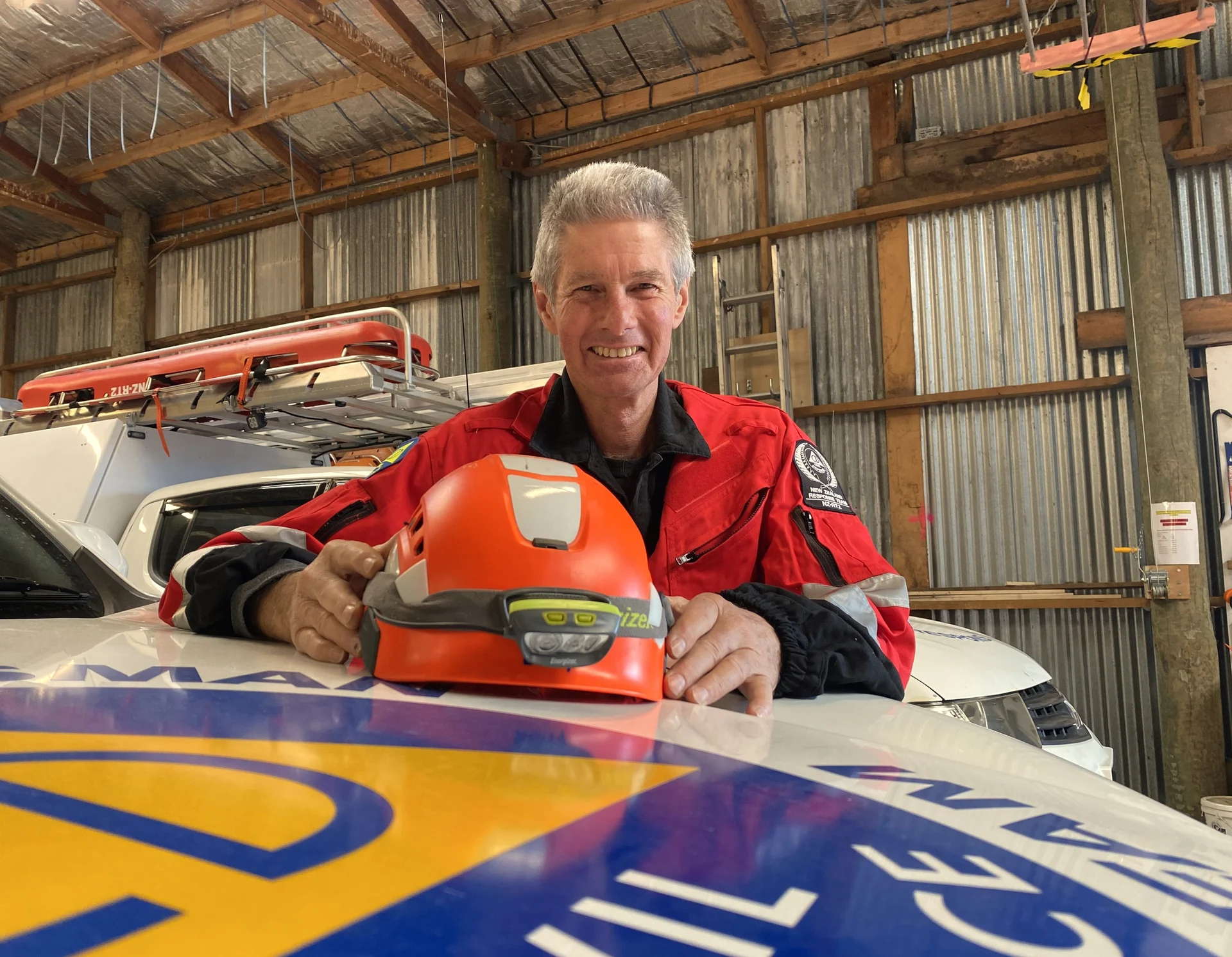
Barry Rowe guided engineers through fractured buildings in the wake of the Christchurch earthquakes, has carried out welfare checks in flooded homes and delivered groceries during the pandemic.
It’s all part of his 20 years with the local New Zealand Response Team, NZ-RT2, earning him a long service medal to mark two decades volunteering for the light urban search and rescue role.
The team works with Nelson Tasman Emergency Management when nature hurls its worst and communities need support.
“We’re their field team, getting information back to EOC (Emergency Operations Centre) so they can make decisions around responses and resources.”
Christchurch earthquakes in September 2010 and February 2011 stand out in his mind over those two decades, particularly climbing up through the 26-storey Hotel Grand Chancellor with specialist engineers, inspecting the damage.
“We were their eyes and ears, looking for hazards. It’s quite eerie going into a building that has no power and is on a bit of a lean.”
The team did three stints in the Red Zone, including door-to-door checks on properties damaged by the quakes.
During the Covid-19 lockdowns, their role involved welfare checks and often grocery deliveries to households that needed help, as well as helping move homeless people into temporary accommodation.
Then, during more recent flooding, welfare checks were a priority in homes where people were feeling vulnerable and dealing with the aftermath.
“It’s the worst day of their lives. Most of the time we’re turning up to people and it’s not a good day for them. They’re very stressed physically, mentally and psychologically.”
Often, it’s rural communities affected by flooding, and Barry says those people tend to be pretty resilient because they are used to dealing with weather events and have practical skills.
“It’s totally the opposite when we get into an urban environment – they expect everything.”
Always on the horizon is the threat of AF8 – a predicted major earthquake on the South Island’s Alpine Fault.
“We hope it doesn’t occur in our lifetime, but we’re preparing for it.”
Usually, the team works with other agencies such as Police and St John, depending on the event, and he says they have trained together so talk the same language.
Every event is a challenge, and it is the team culture that continues to keep him involved after 20 years.
The unit was the second response team to be established in New Zealand, hence NZ-RT2, and Barry is the third volunteer to earn a 20-year long-service medal.
New recruits are sought for the team every second year in a process that is aimed at taking people out of their comfort zones. That will happen next year, when potential recruits will spend 24 hours without sleep and find out how they cope in challenging situations.
