
Nelson residents are being asked to weigh the future of the city’s waterfront, with a draft masterplan proposing a safer waterfront walkway, new swimming access, heritage building restoration and a long-term redevelopment programme that could cost more than $27 million.
Nelson City Council will look to adopt the Draft Waterfront Masterplan at it’s meeting on Thursday. The plan focuses on the Haven waterfront between Collins St and Victoria Rd, proposing a mix of improved public access, better water access, revitalised heritage buildings and upgraded public spaces over the next 10 to 30 years.
Mayor Nick Smith says that the project is about creating an iconic waterfront precinct that better reflects the area’s natural beauty and maritime heritage.
“The problem is poor access, neglected buildings and no plan for its future,” he says in the consultation document.
The plan is built around three priorities: connectivity, activation and coordinated development.
A key proposal is a four-metre-wide shared path running the length of the waterfront. Unlike the existing route beside busy port traffic, the new path would sit behind buildings and car parks, creating a safer and more enjoyable experience for users.
The path is proposed as the first stage of the redevelopment, with supporters arguing it would immediately improve access and open up the waterfront for future projects. Council is asking, through the document, if the pathway should be the first priority.
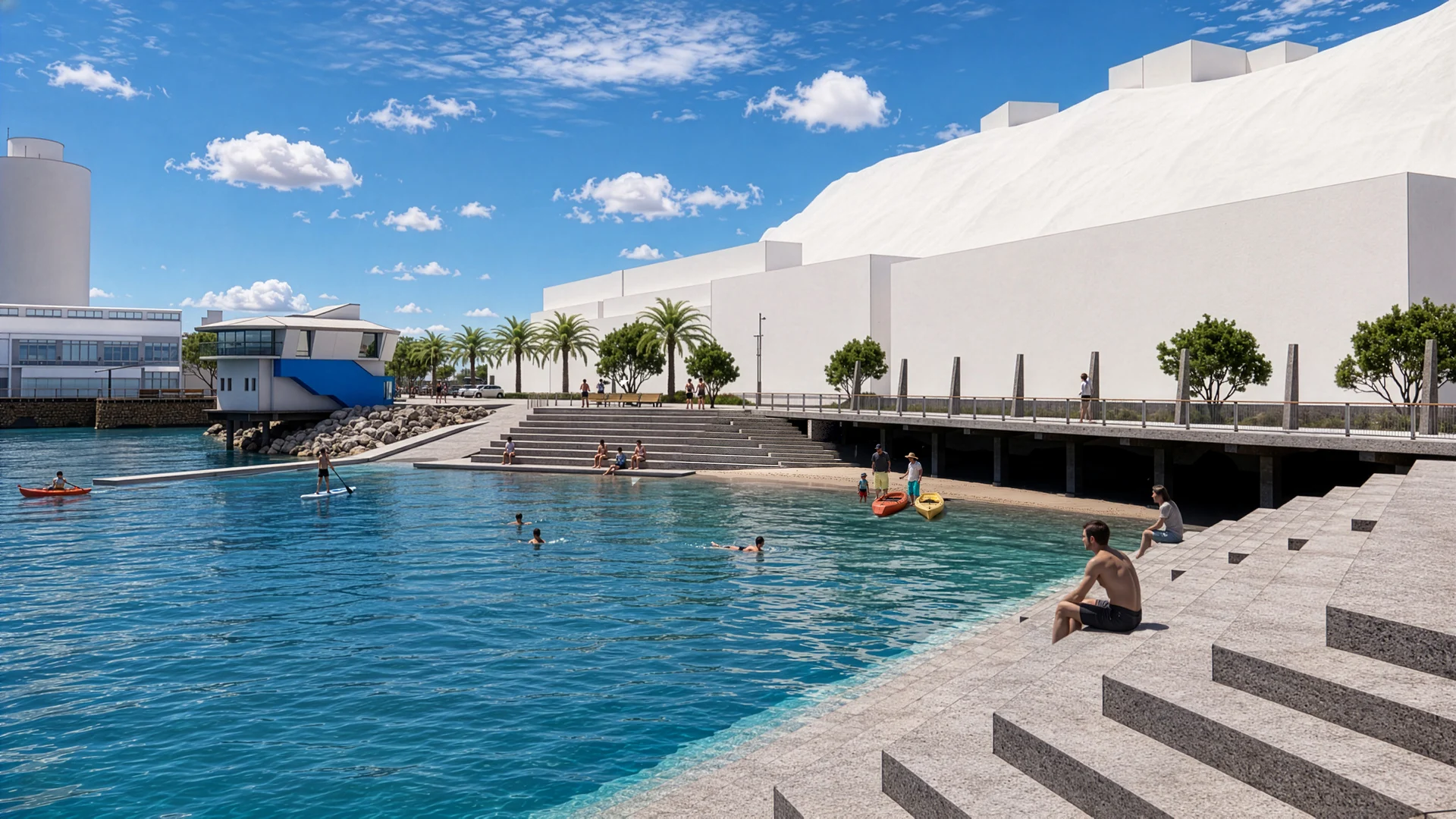
Improving access to the water is another major focus. The masterplan proposes new steps into the sea near the NCC Electricity Building, upgraded facilities for kayaks and waka, and improvements to the existing boat ramp.

The council is also seeking feedback on whether future stages should deliver larger swimming and recreation areas, including continuous waterfront steps and accessible platforms.
Rebuilding the ageing wharf beside the NCC Electricity Building is deemed to be not “affordable”. Instead, the proposal suggests partially removing it while preserving elements of its history and converting remaining structures into habitat for marine life, little blue penguins and native coastal plants.
The earthquake-prone Anchor Building could be strengthened and restored, allowing new commercial tenants to occupy the site, bringing activity back to a currently vacant landmark.
The NCC Electricity Building is identified as the largest proposed investment. The building’s redevelopment, including surrounding waterfront works, is estimated to cost $12 million.
Under the masterplan, the building could house public toilets, changing facilities, hospitality businesses, offices and community spaces, while retaining its well-known Aotearoa mural and operational electrical substation.
The future of the Custom House is one of the most contentious questions facing the council.
Four options are being considered, ranging from undertaking minimal maintenance to keep the building secure through to a full restoration and fit-out for accommodation, hospitality or events. The most dramatic option would see the building demolished and replaced with about 18 additional car parks.
The consultation document acknowledges competing priorities between heritage protection, cost, parking demand and the long-term activation of the waterfront.
The redevelopment would reshape existing car parks, provide new bus shelters and create safer pedestrian crossings. The masterplan notes that reshaped waterfront parking, together with a new car park planned on the former Four Seasons site, could add between 44 and 51 parking spaces, with additional spaces possible if Custom House was removed.
Stages one to three of the plan carry an estimated cost of $27.3 million. However, the masterplan itself does not commit funding. Any future spending decisions would be considered through the council’s Long Term Plan process, with further public consultation.
“Money is tight, but it is poor economics having empty council-owned buildings and unused valuable land,” Nick says.
The council is also asking whether it should seek funding from external sources such as government grants, trusts and private investment partners.
Councillor Mel Courtney, chair of the Waterfront Redevelopment Taskforce, says no decisions have been made, and public feedback will play a major role in determining the waterfront’s future.
“This is going to be a real asset for the city.”
Councillor Sarah Kerby, who also sits on the taskforce, isn’t concerned that the project will fall under the shadow of the recently consulted Civic Centre proposal.
“I hear from people all the time that the cost of living is top of mind for their friends, for their family. I know it’s really tough out there. Sometimes we have to spend money to make money and activate this area. But also, I think if you’re seeing your hard-earned rate dollar used well for something really beautiful that you will enjoy, you’re quite happy to spend that money. It’s a sensible investment.”
Public submissions open on Monday, 5 October, and close on Monday, 2 November. Submissions can be made at shape.nelson.govt.nz
