
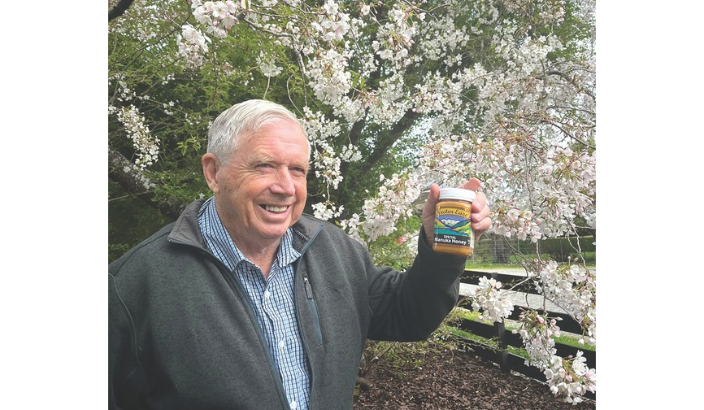
From hives tended by his grandparents more than a century ago to customers across the world today, Philip Cropp has spent a lifetime building on his family's honey-making legacy.
Formed in 1973, Nelson Honey is operated by third-generation beekeeper and managing director Philip, who has been in the industry for more than 50 years.
He brings a “honey will fix it” approach to his friends and customers.
Philip’s grandparents started producing honey from hives in the Nelson area more than 100 years ago.
“We are looking forward to a busy summer,” Philip says.
“The warmer weather brings more visitors to the region, and our shop gives people an opportunity to stop, enjoy a real fruit ice cream and discover the range of local products we offer.”
Philip’s can-do attitude has helped him develop revolutionary honey products, including Nectar Ease and Royal Nectar.
“Nectar Ease is a special honey that has bee venom and mānuka honey which helps discomfort,” Philip explains.
Philip was one of the first in his industry to combine mānuka honey with bee venom, following requests from a farmer down the road who suffered from arthritis.
After considerable testing he launched Nectar Ease, also known as the “aches and pains honey” as it may assist people who suffer from sore joints, arthritis and related problems.
While, in 2010, Philip started experimenting with a skincare range that would combine the health benefits of Nectar Ease with the wellness benefits of skincare.
He figured that if the combination of mānuka honey and bee venom supported cortisone production in the body, then it could also be used on people’s skin too, and this was how the Royal Nectar skincare range was born.
While last season was a challenging one for some beekeepers, Nelson Honey still produced a good range of honey, with products such as Rātā, Mānuka, Honeydew and its West Coast Honey.
“Rātā was particularly notable, with a strong harvest,” Philip explains.
“Every season is different because honey production depends heavily on weather, flowering conditions and the availability of nectar.”
For the coming season, Philip is hoping for favourable weather and good flowering conditions.
“We will continue to focus on producing and supplying quality New Zealand honey while responding to what our customers are looking for,” he says.
For Nelson Honey, one of the ongoing challenges is the increasing cost of production, freight and other business costs.
“Honey is a natural product, so supply can also vary from year to year,” Philip concedes.
“We are working closely with our beekeeping and supply networks, managing stock carefully and maintaining good relationships with our customers so we can respond to changing supply.”
Nelson Honey also has a large international customer base, with products exported to overseas markets.
“We are hoping for a positive season and another opportunity to showcase New Zealand honey and local products to both visitors and customers from overseas,” Philip says.
Nelson Honey also produces its own apple cider vinegar, propolis spray, mouthwash and bee pollen capsules, while real fruit ice creams will help to cater towards the influx of summer holiday makers staying across the road at Quinney’s Bush Camp.
