
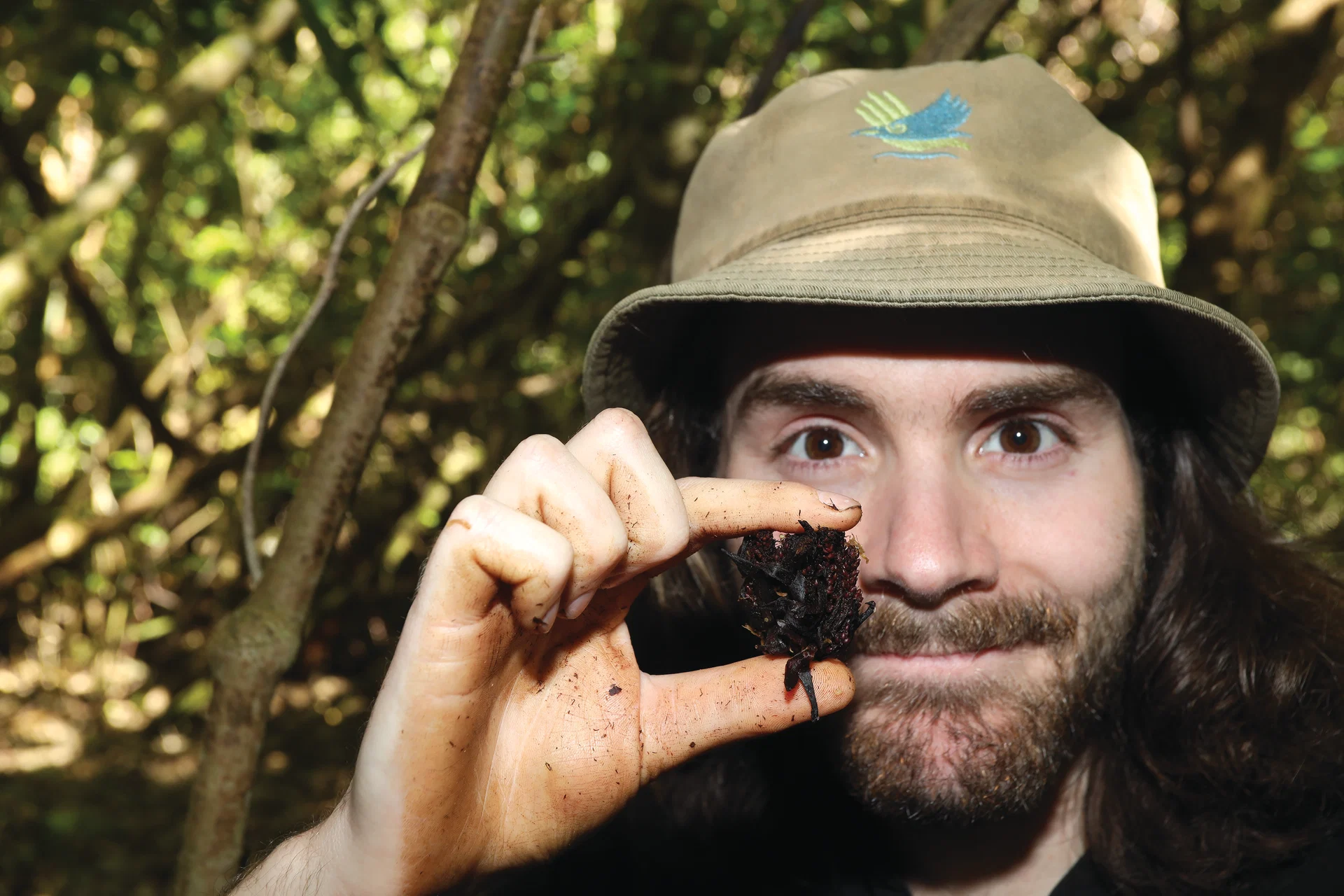
Like a taonga entrusted to the whenua, 30 seed heads from a plant thought to be extinct or extremely rare in Te Waipounamu (the South Island) are now on an unseen journey towards renewal beneath the forest floor.
Translocated to The Brook Waimārama Sanctuary from Ngā Manu Nature Reserve in Waikanae last Thursday, the fully parasitic Dactylanthus taylorii, also known as pua o te rēinga, wood-rose or Flower of the Underworld, has been sown to await a māhoe host root, which it relies on for sustenance.
The plant is the only is the only flowering, fully parasitic plant endemic to New Zealand and has no green leaves or true roots of its own.
Working alongside Ātiawa Ki Whakarongotai, Ngāti Rereahu and iwi of Te Tau Ihu, particularly Ngāti Koata, Ngāti Rārua and Ngāti Toa, the project hopes to restore the taonga species, its pollinators and its ecological function.
The Brook Waimārama Sanctuary biodiversity ranger Henry Hart says it could take three to seven years for the project to come up roses.
“There’s 30 seed heads which are an inflorescence, which is like a collection of flowers, and each inflorescence has like 2000 to 4000 seeds, so there’s pretty good odds of something being established,” he says.
“Part of our goal is to be able to have access to the plant to learn what could pollinate it, and also making this really awesome plant, that's super unique, available for people to see and to understand because it's not very well known by most people.”
The chocolate-brown tuber produces flowers and nectar that attract species including short-tailed bats and kākāpō.
Te Ātiawa o te Waka-a-Māui kaitohutohu taiao (environmental adviser) Renēe Love says the sanctuary is a “prime location” for the seeds and could help repopulate the species while providing another food source for taonga species such as pekapeka.
“Because of Brook Waimārama's reputation in holding so many taonga species with the predator fence, they do such a good job of just taking care of our taonga species and our taonga tuku iho,” she says.
“If they're able to successfully have plants pop up in Brook Waimārama Sanctuary, there's potential for us to translocate more of those plants to other areas, possibly in some sanctuaries over in Marlborough, and also probably some of the other ngahiri over in Mohua (Golden Bay) and Abel Tasman.”
