
CATHERINE HARRIS
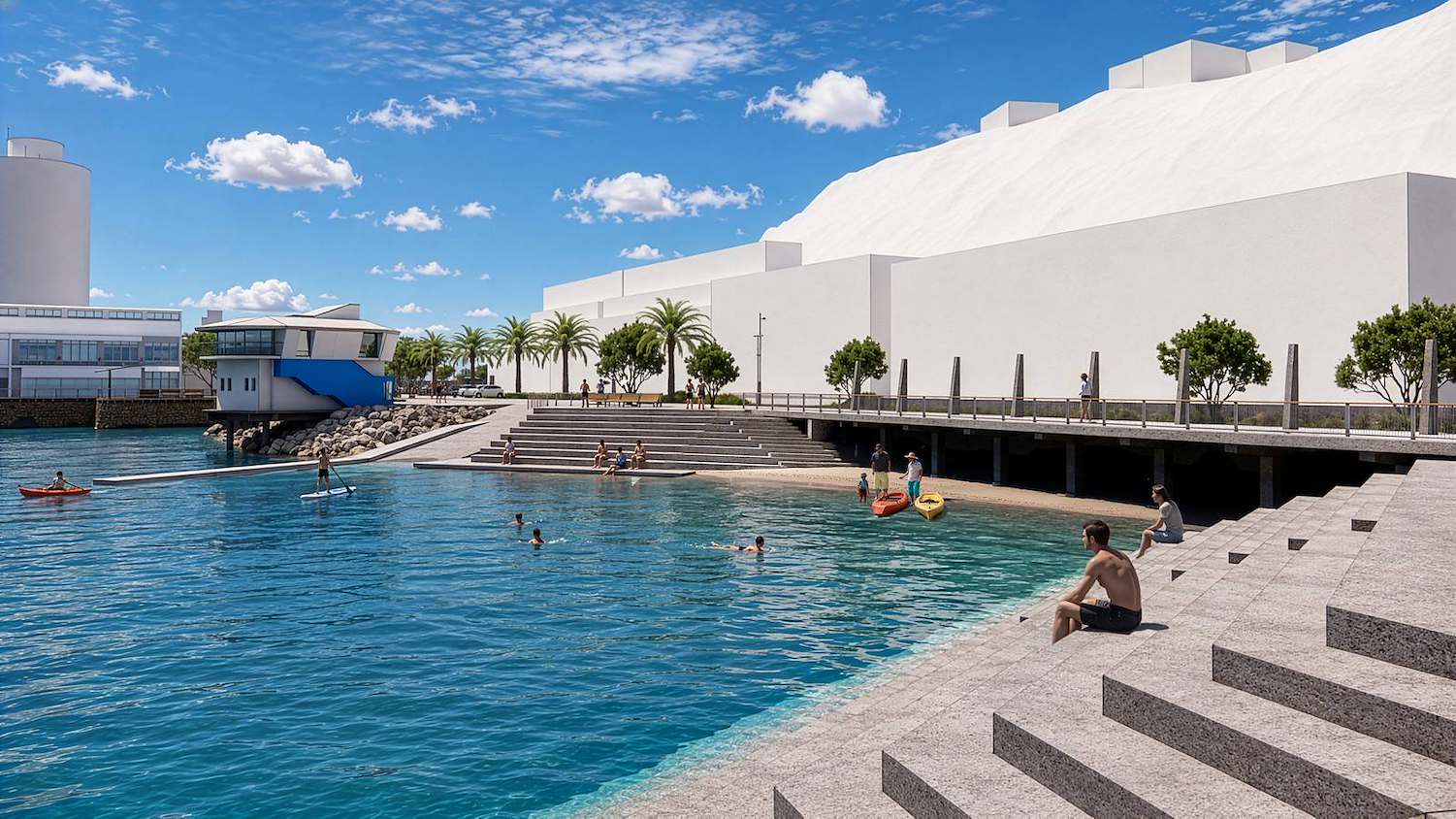
Beautiful views, a glass of wine at sunset, safe swimming and a family-friendly shared path – there’s general excitement over the prospect of a redevelopment of Nelson’s waterfront.
Nearly 430 written submissions were received by Nelson City Council on its waterfront masterplan, and another 30 oral submissions were heard when the council met last Wednesday.
Sentiment was largely positive, but a few groups hoped the plan would also be used to address critical roading and pedestrian access issues.
Support was strong for Stage 1, a slow-paced shared path with greening and shade, with high hopes for more hospitality and better swimming access.
“As a runner, I often have to stop and step off the path to let bikes past, and I don’t feel comfortable biking there with my young children,” one resident wrote.
“A wider, safer path, a clean and accessible space to swim and a good food or coffee cart would make this an area I would visit regularly with my family.”
But another submitter felt the port needed to be prioritised, and that although the shared path “sounds lovely,” there was very minimal footpath space for it.
A few also had reservations about the safety of swimming and cycling along the waterfront which is heavily used by vehicles and boaties.
“We currently use the beach area (to the left of the coastguard building) for our dog to swim but it’s never occurred to us to swim ourselves as it’s very close to the big boats,” said one submitter.
Another said the safety of cyclists on Rocks Road was paramount.
“To this end, any money would be better spent creating a safe pathway beside the sea from Haven Road to Tahunanui.”
The Tahunanui Business and Citizens Association supported the plan in principle, but held concerns that it did not tackle the SH6 corridor between Victoria Road and The Sands.
It hoped the plan would apply pressure on NZTA to rectify the safety of the road and access.
“There is currently nothing in the Masterplan that inherently makes it safer for vulnerable users trying to reach the beach,” it said, adding that many Tasman residents also entered the city via this route.
Brian Pollack of The Boathouse Society said they were “very happy” with the plan and supported the retention of the council’s three heritage buildings – The Custom House, The Anchor Building and the Electricity Building.
Swimmers would need changing facilities, and he hoped some thought would also go towards the protection of the society’s own heritage building from the waves.
When it came to the future of the council buildings, many wanted the NCC Electricity Building to be kept and leased out, despite the $12m price tag.
Bringing the Anchor Building back into use was also a popular option.
But opinions were divided on the retention of Custom House. Some backed the demolition and more carparks option, even though its heritage status might make that a long and difficult process.
The plan took pains to point out that at $1m-$1.5m, demolition would be more expensive than keeping the building dry and secure ($0.25-$0.6m).
But many submitters said they were fine with either the $2m or $3.5-$5m restoration options.
The first three stages of the waterfront masterplan would cost an estimated $27.3m, which would be budgeted in the Long Term Plan.
Many people agreed with one resident’s summation that the area “has been underutilised and has so much more potential to offer”.
The waterfront buildings were “a prime location for developing into a cool place to hang out with family,” another submitter, Steve, said.
“So much of Nelson is all about cars, and anything that prioritises feet and people is welcome.”
The feedback will now go to the Waterfront Development Taskforce before a final report goes to Council on 17 December, to then decided whether to adopt the Masterplan.
