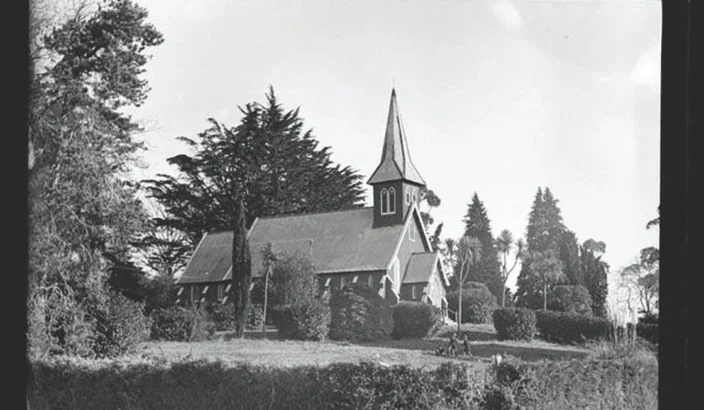
The Parish of Trinity Church was formed in November 1855, bringing Richmond church under the Diocese of Nelson. A small church was built that same year, with divine services held every Sunday morning in Richmond.
Once a month, a clergyman visited Waimea West, Spring Grove and Wakefield.
As the congregation grew, the original church became unsuitable. The Diocesan Trustees secured five or six acres of land in Richmond for a new Holy Trinity Church, but the site proved unsuitable and was sold. In 1862, a two-acre site was purchased, which remains the church’s location today.
Progress was slow, and it was not until 1869 that a building committee was formed, including Rev D. Rusz, Captain Walmsley and Messrs Barnicoat, Benfield, Canning, Croucher, Hall, Harrington, Mackay, Muntz, Nicholas and Pickering. One of their first decisions was to engage renowned architect William Beatson to design the church.
The new Holy Trinity Church opened on Wednesday, 31 July 1872, after two postponements due to bad weather. Large crowds from Richmond, surrounding districts and Nelson attended. Morning and afternoon services were held, with many unable to fit inside for the afternoon service. Among the clergy present were Revs G. Johnstone, R. Thorpe, C. Mules, R. Gaskin and W. Rusz, the curate of the new church. The Bishop of Nelson consecrated the building, and the morning service featured special psalms and lessons. The newly-purchased Mason and Hamlin organ was initially out of order but was repaired in time for the evening service, where it played with a rich, full tone.
The church cost about £575, funded through subscriptions and a loan repaid by weekly special services and offerings. Due to limited funds, the original plans excluded the vestry, chancel and tower. These were added later: the chancel and vestry in 1885, designed by Mr Stead Ellis, and the tower in 1890. That same year, a new Sunday School room was built closer to the church to replace the old, inconvenient building. In 1984, the church was extended. Back in 1872, the church was described as “a beautiful and substantial edifice which is a conspicuous ornament to the village and neighbourhood, being seen for miles away.”
Today, Holy Trinity Church still stands proudly on the hill, radiating its rich history and continuing to serve the community.
