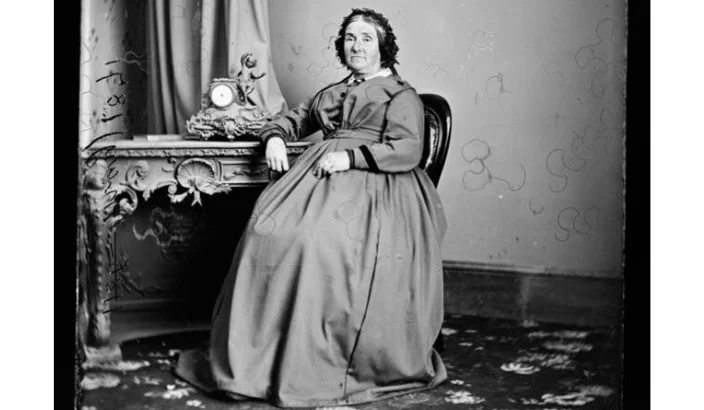
At the Wallis home, daily life was shaped by a firm belief that children should be fully equipped for adulthood, with work, routine and care forming the backbone of their upbringing.
The boys were trained in industry, but all were expected to carry out a wide range of chores. These included cutting wood, cleaning knives, boots and shoes, scrubbing, digging and weeding the garden, catching and harnessing the horse, milking the cows, and yoking bullocks to a plough or cart.
Every boy over eight was taught to wash his own clothes as well as those of the younger boys, including socks, shirts, slops and trousers. The elder boys learned to sew, while the younger ones were taught to sew on buttons and mend holes in breeches.
At 14, boys were either apprenticed or placed into service. Richard took responsibility for finding a position suited to each child, and once a placement was secured, an agreement was signed preventing the boy from being removed before the end of a three-year term.
Wages were low, ranging from 1s to 3s a week, and were paid quarterly into the Post Office Savings Bank by the employer. Provision was also made for the boys to receive between 1s and 1s 6d a month in cash as pocket money, independent of their wages.
The girls were instructed in all household tasks, including knitting socks, darning, mending, washing, scrubbing and bed making. Depending on their age, they became housemaids, assistant cooks, kitchen maids or nurses.
While living at the home, the girls also assisted with bread making and baking, churning and butter making, sweeping and dusting, laying tables and other daily tasks.
Like the boys, the girls went into service under a formal agreement, but for a shorter period of two years. Their wages were generally low, ranging from 2s 6d to 6s a week. Most of this money was placed in the savings bank, with each girl keeping and monitoring her own bank book.
Even after leaving the home to begin their working lives, many of the children returned for holidays and remained in regular correspondence with Richard and Mary. If a child lost their position, they were free to return to the home.
The Wallis’ guiding principle was that family ties should never be broken, and that the home would remain a place of safety for as long as protection was needed. They aimed to teach children the value of time, as well as the worth of their hands, abilities and mental powers.
They publicly stated that their purpose was to provide home training, foster self-control, self-respect and self-advancement, and to instil the belief that a free and independent spirit could only flourish in an atmosphere of love.
Life at the home was modest. Breakfast consisted of oatmeal porridge with bread and butter or dripping, accompanied by half a pint of milk or sweetened milk and water. Dinner was meat, potatoes and vegetables, followed by plain suet or rolled jam puddings, or rice with sugar or jam. Tea was bread and butter with jam or honey, or seed cake with milk.
At its peak, the home cared for about 42 children at any one time, with numbers evenly divided between boys and girls.
After a lifetime devoted to caring for children, Richard died on Sunday, 28 August 1882, aged 63, and was buried in the Motueka cemetery. Mary continued running the home with the support of their children, Richard, Frances and Kate, until about 1887, when it closed.
Mary died in May 1910 and was buried alongside Richard in the Motueka cemetery.
