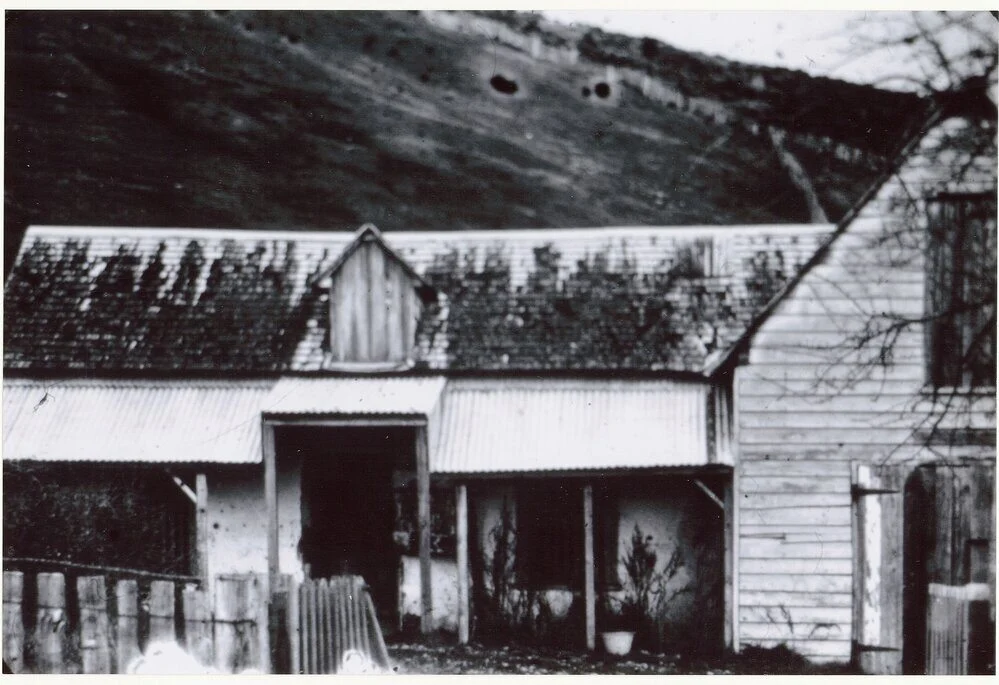
As settlements spread across the South Island, the need for a reliable postal service quickly became clear.
The Local Posts Act of 1856 gave provincial councils authority to establish their own mail services and local post offices, each requiring a postmaster. Long before that legislation, however, Wakefield residents were already finding practical ways to keep letters moving.
James Thomas Smith arrived in Nelson in 1842 aboard the Whitby, one of the two expeditionary ships. After the collapse of the New Zealand Company he settled in Wakefield, then known as Pitfure, and became the local schoolmaster in 1845.
In mid-1849 Smith agreed to receive and forward newspapers and letters from the school building for residents of the Wairau district. His only condition was that anyone travelling in that direction would call at the school, collect the mail and carry it onward.
In April 1851 a proclamation introduced a colonial rate of postage on all letters passing through any post office, charged by weight. Letters weighing less than half an ounce cost twopence, with an additional twopence for every extra half ounce.
Pressure from settlers for a more formal arrangement led authorities to announce the commencement of an official postal service in 1852. Smith was appointed the first postmaster at Wakefield.
After receiving news of his mother’s death in England, Smith took leave to settle her affairs. On returning to Wakefield he continued teaching until a replacement was appointed, before moving to Nelson to teach at the Town School.
His successor was John Squire, who became headmaster of Wakefield School and postmaster about 1856, earning £12 per annum. John was born in Surrey in 1823 and trained as a chemist in London. In August 1851 he and his wife Eliza, along with their four children, emigrated to New Zealand and settled in Wakefield.
By December 1859 the growing importance of mail services was evident. An advertisement in the Nelson Examiner called for tenders to deliver mail twice weekly, on Tuesdays and Saturdays, between Nelson, Waimea West, Spring Grove and Wakefield.
After 10 years as postmaster, John was relieved of his position in 1866 after being found “inefficient” and responsible for damaging the postage date stamp. He was ordered to pay a month’s salary to cover the damage. Following his dismissal, he moved to Spring Creek to teach.
The misuse or damage of postage stamps was treated seriously. In 1860, William Jefferies of Waimea South was charged with defrauding the revenue by using a stamp that had been previously defaced. He was fined 40 shillings plus costs.
Richard Chattock was appointed Wakefield’s new postmaster in October 1866 and was reportedly paid at a significantly higher rate than his predecessor.
About 1878 the post office was moved out of the school and began operating from the railway station instead.
For those interested in local history and collecting, the Nelson Philatelic Society will be joined by the Nelson and Waimea South Historical Societies, the Society of Genealogists, the New Zealand Airman Society and the New Zealand Postcard Society at Collecting History Day at Founders Park on Friday, 18 April.
