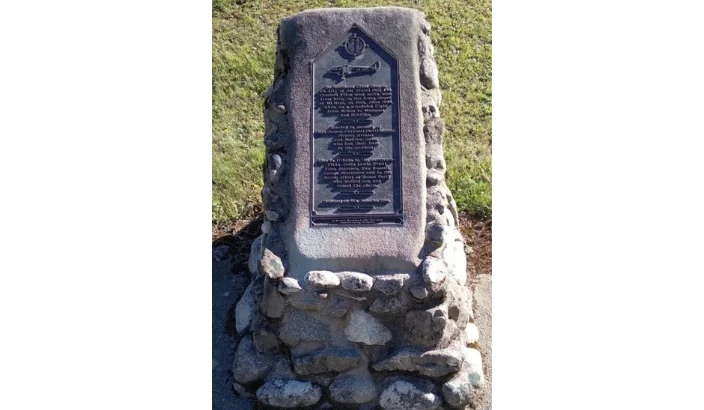
A routine wartime flight from Nelson to the West Coast ended in tragedy when a small passenger plane crashed high on Mount Hope, leaving two dead and others injured in one of the region’s most harrowing aviation accidents.
In the early afternoon of Sunday, 30 June 1944, an Air Travel (New Zealand) de Havilland Dragon aircraft departed Nelson on a scheduled service to the West Coast.
On board were pilot Flight Lieutenant P. Lewis and passengers Ellen Paterson, Captain J. Mercer, Maurice Dawe, Eva Russell, George Stratmore and Bruce Perry.
When the aircraft failed to arrive after two hours, concern began to mount. The plane had no radio capability, and although search aircraft were organised, worsening weather conditions forced them to turn back.
The first word of the crash reached Nelson at about 11pm, when truck driver Arthur Hughes, travelling near Kawatiri, encountered Bruce Perry walking along the road. Bruce had made his way about 1.5 miles from the crash site before collapsing from his injuries.
Arthur drove on to Gowan Bridge to raise the alarm. Murchison police immediately organised a search party and headed to Kawatiri with a doctor and a nurse.
It later emerged that Bruce and pilot Lewis had initially set out together to reach the road. Within about 150 yards of it, Lewis collapsed due to his injuries. Arthur and P. Diserens, of Gowan Bridge, returned to the area to locate the pilot.
At the subsequent inquiry, Lewis described what had happened during the flight.
About 45 minutes after leaving Nelson, the aircraft banked steeply and suddenly dropped, crashing into dense bush on the slopes of Mount Hope.
Lewis told the inquiry he had judged, based on weather reports, that the route through the Buller Gorge was the safer option. Flying into a south-west wind, the aircraft was caught in an updraft. Higher up, the wind was more westerly, and the plane became trapped between the two air currents.
The aircraft stalled and began to fall. Despite opening the throttle fully, Lewis was unable to gain enough height to recover.
The plane struck trees along the ridge and was left suspended about 30 feet above the ground. The nose was torn off and the fuselage ripped open, throwing the passengers down the hillside.
Ellen found herself on the ground still strapped into her seat, suffering a broken pelvis. Lewis was thrown clear and left badly dazed. Bruce was struck in the chest and rendered unconscious. George was injured, while Eva suffered two broken legs.
Maurice received fatal injuries and died on impact. Captain Mercer survived the initial crash but died during the night from his injuries.
At about 4pm, Bruce regained consciousness and, together with Lewis, attempted to reach the road. Forced to stop every few minutes due to their injuries, the journey took about five hours.
Conditions at the crash site were described as atrocious, with bitter cold, strong winds and driving rain, leaving those still on the hillside unsure whether rescue would come.
At about 1.30am the following morning, the calls of the rescue party were heard. Eva and Ellen responded by calling out, but it took another 1.5 hours before searchers reached the site.
The injured were strapped into stretchers and carried out, a process that took a further four hours.
The inquiry, held in late September, revealed the aircraft had recently been purchased from the Air Force and had previously been operated by Union Airways of New Zealand Ltd. It held a current certificate of safety, and the combined weight of passengers and cargo, 1605lb, was within the maximum allowable weight of 1623lb.
The inquiry returned a verdict of loss of control caused by an updraft, and Lewis was exonerated of any breach of care.
The people of Murchison, along with the local doctor, nurse, and constables Squire and Valentine, were formally thanked for their assistance.
The pilot’s seat was later recovered from the crash site and placed in the Murchison museum, where it remains a stark reminder of the accident.
