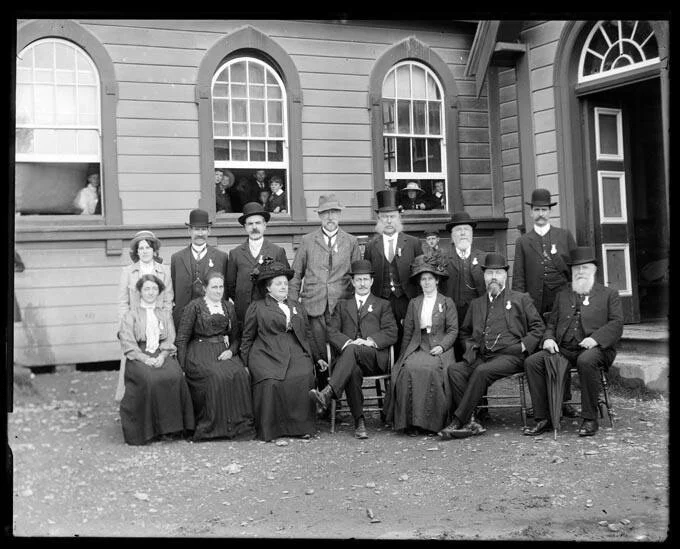
From the earliest years of settlement, British immigrants carried with them a deep reverence for royal occasions. Births, weddings, deaths and coronations were not merely noted, they were celebrated with enthusiasm and community spirit.
So, when the coronation of King George V approached in 1911, the people of Richmond were determined the occasion would not pass quietly.
Mayor James Hunt called a public meeting, inviting townsfolk to help shape the celebration. The response was unanimous. The district would mark the coronation with a grand gathering of schoolchildren at Richmond Park.
With permission secured from the A & P Association, a committee sprang into action, organising what they hoped would be a day long remembered.
Tasks were quickly assigned to Messrs R Hunter, G Wearing, H Dyson, T Goodman, H Buttle and J Glen, who took charge of arranging a sports programme for the children. Schoolmasters were enlisted to collect sixpence from each participant to help meet expenses towards what was promised to be a big day.
Transport, however, proved a considerable headache. Each group wanted to arrive together, but with only a limited number of engines and carriages available, such coordination was impossible.
After much discussion, a staggered plan was agreed. Soldiers would arrive first by 9am, followed by a second train carrying about 500 children and their parents an hour later.
On the day, children were to gather at Richmond School to receive commemorative medals before forming into a grand procession. Led by the Richmond Brass Band, they would march alongside the fire brigade and various friendly societies, joined along the way by children from Stoke Industrial School at the railway station.
Together, they would proceed to the park, where a flag salute and united service would begin the formalities. A shared luncheon would follow, then an afternoon of sport and games, ending with the singing of the National Anthem at 3.15pm. That evening, a grand historical and fancy-dress ball was organised to ensure the celebrations continued well into the night.
Just days before Coronation Day, however, ominous weather forecasts forced organisers to make the difficult decision to postpone most of the outdoor festivities.
Determined the event would still be held in some form, local schoolchildren assembled at 10.30am at the school, where the flag was saluted. From there, they marched to the Oddfellows’ Hall, joining a large gathering of townspeople for a united service.
Following the singing of the National Anthem, the formalities came to a close and the children, along with their families, returned to the school for luncheon. Each child received a coronation medal as a lasting reminder of the occasion.
A few days later, the Coronation Ball, held in the Oddfellows’ Hall, attracted more than 40 couples. The hall was brightly decorated with flags, lanterns and ferns, while fancy dress styles ranged widely. The most popular costumes included Elizabethan outfits, Pierrots, gypsies, pirates, Spaniards, Japanese and girl scouts.
In early July, the Coronation Committee met one final time, resolving to hold a grand children’s gala at a later date.
