
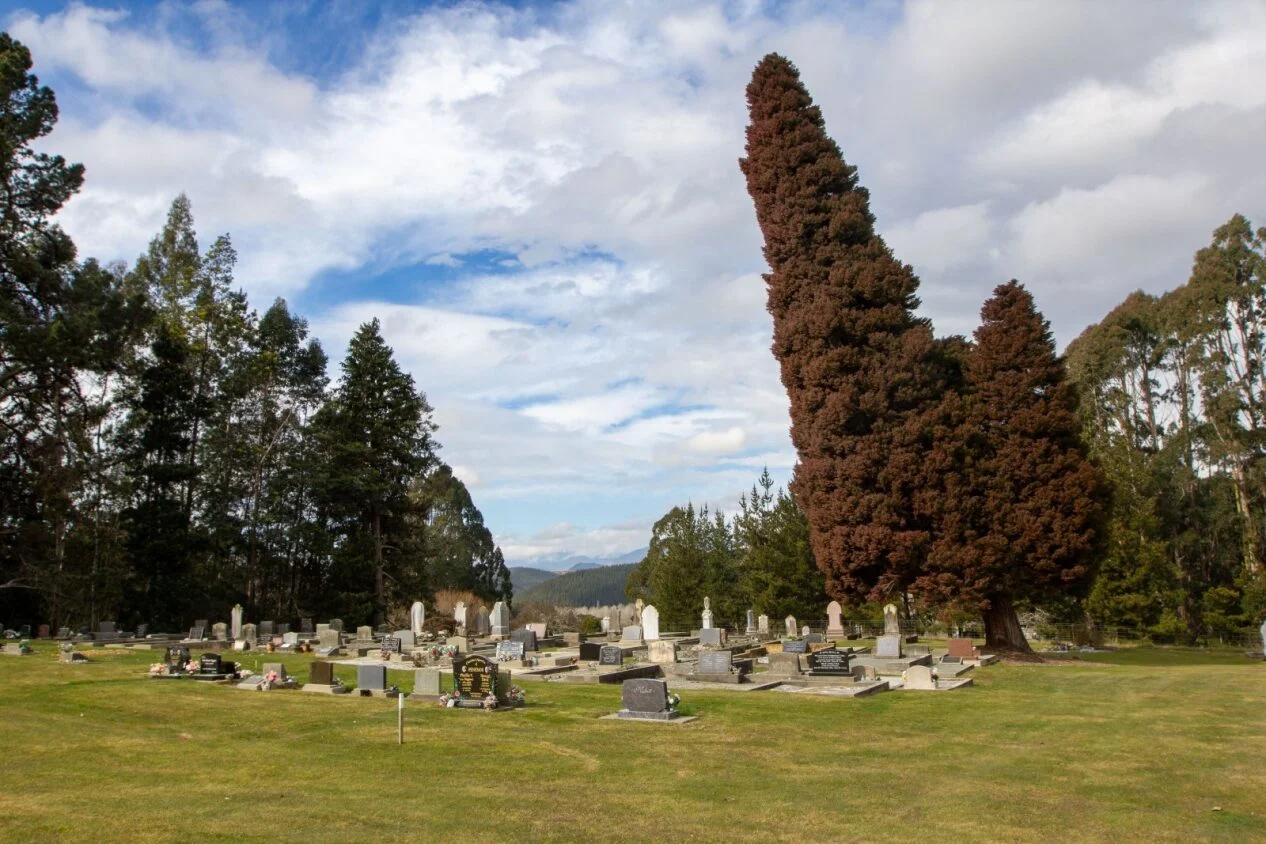
On a Monday night in October 1891, Foxhill residents gathered in the Foxhill schoolroom to discuss the growing need for a local cemetery and how they might secure land for the purpose.
At the time, the nearest burial ground was Spring Grove, about nine to 12 miles away. For families living in Upper Wai-iti and Quail Valley, the distance was even greater. The long journey caused hardship, adding expense and making it difficult for grieving families to visit loved ones’ graves.
The Waimea County Council was approached and agreed to contribute £25 towards the purchase of land, provided the settlers could raise the balance. The Foxhill community also sought a Government grant, but the Lands Department advised it had no funds available for buying cemetery land.
Waimea–Picton member of Parliament, C. Mills, offered to undertake a land survey free of charge, should the settlers be able to purchase a suitable site.
Land owned by Mr Tidd, on the main road between Foxhill and Belgrove, was identified as a suitable location. Tidd was willing to sell at £10 an acre. Mills suggested a possible exchange for Crown land, but with little Crown land available locally, the idea went no further.
A motion was passed to again apply to the Waimea County Council for its £25 contribution, with a proposal to purchase three acres from Tidd. Local residents would subscribe the remaining £5. The council agreed to the £25, on the condition the settlers matched that amount.
When it became clear the residents could not raise the full sum, the council ultimately agreed to purchase the three acres itself, provided the community contributed £5 and covered all transfer costs.
Progress followed quickly. In December 1891, the Minister of Lands confirmed that, in addition to surveying the land, 100 burial plots would be laid out on the site.
By 1893 the cemetery was in use. One of the first burials, if not the first, was that of Jacob Henry Granger on Wednesday, 28 July 1893.
Jacob was born in Kent in May 1848 and had arrived in Nelson by 1874. In August that year he married Mary Jane Andrews at St John’s Church in Wakefield. The couple had nine children, the youngest born in 1892, and the family lived in Foxhill, where Jacob was actively involved in the community.
In late July 1893, Jacob was travelling in the Tophouse area when he was found deceased on the road. An inquest found he had been driving through the Big Bush when the wheels of his trap struck a stump, causing it to capsize and throw him out. He died instantly.
His body was returned to Foxhill for burial in the cemetery the community had worked so hard to establish.
