
For decades, organisations across the Upper Motueka Valley lobbied for the Midland railway to be extended through to Murchison.
The cost of transporting produce and other goods between Nelson and Murchison was high, with freight having to travel by road to and from the railway station at Kohatu. When the announcement was made that the line would be extended to Glenhope, it raised hopes among residents, farmers and business owners in the Murchison district that a railway station of their own would eventually follow.
By March 1912, construction of the Glenhope section was progressing well and settlers in the surrounding area organised entertainment for the men working on the line. Plans for the necessary railway buildings were drawn up and Nelson contractor S. Galbraith was engaged to undertake the work at a cost of £4500. Around the same time, a Murchison deputation met with the Minister for Mines to urge assistance in securing the rapid construction of the railway through to their district.
As the Glenhope section neared completion, an opening date of Sunday, 3 June, was initially set. However, the engineer in charge advised authorities the line could not be handed over to the Railway Department until 15 June, due to delays in blasting operations.
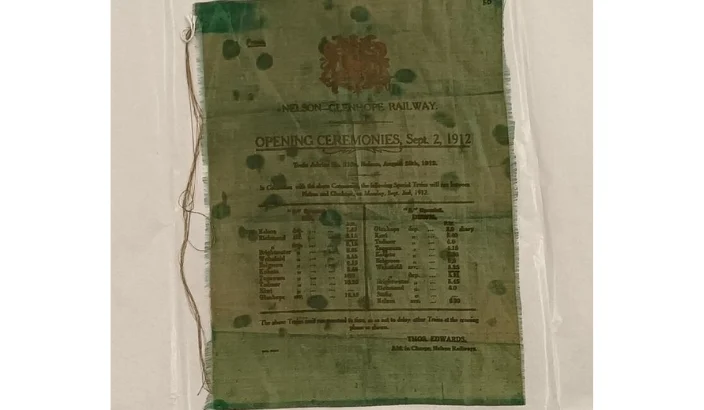
Tentative dates of either 22 or 24 June were later suggested by the Chamber of Commerce for an opening function at Glenhope, with Murchison residents invited to attend. This too was postponed when officials were unable to be present, and August was floated as an alternative. Eventually, the opening was confirmed for Monday, 2 September 1912.
The railway line was constructed along steep hillsides, with vast quantities of earth removed to make way for the track. After reaching the top of Tadmor Saddle, the train ran through a deep cutting before emerging on the far side of the hill, facing Mount Murchison.
When the first passengers disembarked at Glenhope, they were offered the chance to explore the small settlement. Contemporary accounts recorded that many were disappointed, having expected to find a thriving town.
During the opening ceremony, a ribbon was stretched across the tracks in the station yard by Mayoress Field and Miss K. Lucas, the daughter of the president of the Chamber of Commerce. As the front of the engine broke through the ribbon, the crowd formally marked the occasion. The ribbon was then cut into pieces and worn by attendees as a memento of the day.
The ceremony concluded with the formal taking over of the line on behalf of the Railway Department by Mr Herries.
