
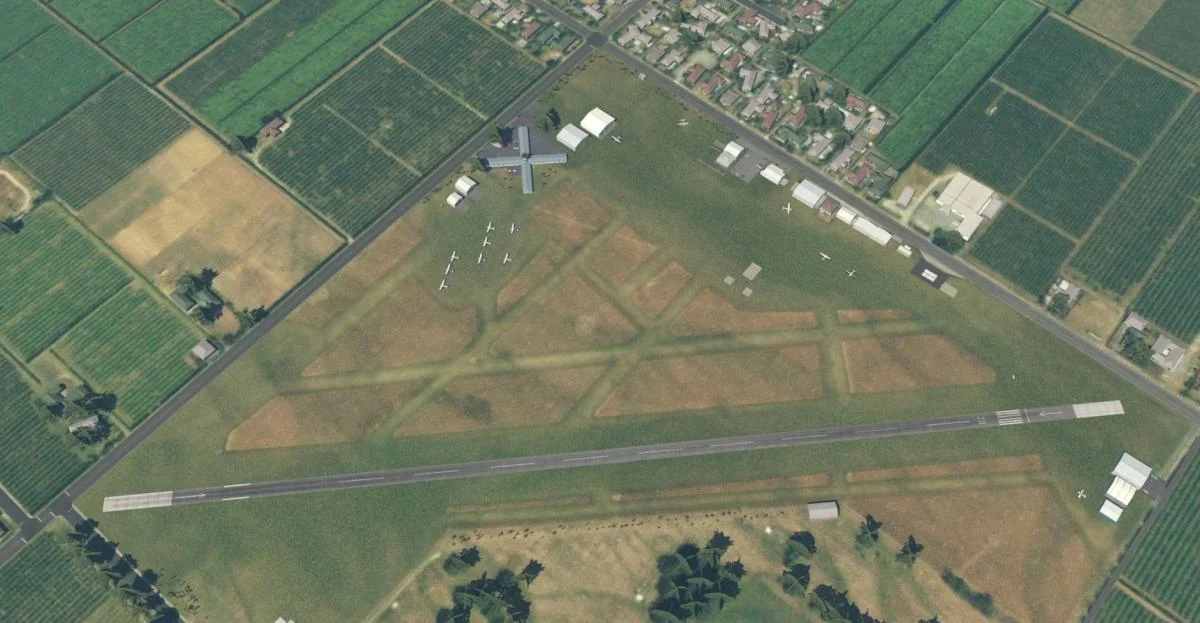
Motueka’s push to join New Zealand’s growing aviation network gathered pace in 1934, as the community rallied behind plans to build a local aerodrome.
In March that year, the Progress League met to advance the establishment of an aerodrome, while the Motueka Borough Council, led by Mayor York, was already negotiating to secure land at Hau. The 50-acre property, owned by Mrs Knyvett, was leased for £35 a year over 10 years, with an option to purchase for £1000.
By the end of March, the new Motueka Municipal Aerodrome officially opened. Five aircraft flew in for the occasion, including a Waco from Wellington. Spectators were treated to passenger flights as well as aerobatic displays, military manoeuvres and formation flying.
Later that year, in November, the council moved to lease an additional 18.5 acres. This expansion ensured the aerodrome met the requirements of the Controller of Civil Aviation, allowing aircraft to land from any direction. The agreement included a nine-year lease, with an option to purchase the land for £600.
In early 1935, the council approached the Transport Board and the Director of Civil Aviation, seeking to have Motueka designated as a terminus for a proposed trans-Tasman air service. The aerodrome’s coastal location, low approach paths and two runways measuring 900 and 700 yards were seen as strong advantages.
Progress stalled, however, as further work was required on the site. Neither the council nor the Government initially acted, with the Public Works Department unwilling to begin work until improved lease arrangements were secured.
This was resolved in late November, allowing work to begin under the Unemployment Scheme. Labourers worked on a cooperative contract, earning 12 shillings a week for 40 hours if married, and nine shillings if single.
On 9 December, formation work began on the 69-acre site. The process involved removing topsoil, extracting stones, and using rough material to build up the base before replacing and preparing the surface for grass. The landing ground was shaped like an L, measuring 32 chains in both directions.
The Government committed at least £10,200 in wages through the Unemployment Board. The Motueka Borough Council contributed £500 towards tools, plant, supervision and materials, with the Public Works Department providing a further £500.
A new runway parallel to College Street, running east to west, was constructed while the existing rough runway remained in use.
In mid-1936, tensions emerged on site. Under the auspices of the New Zealand Workers Union, 170 men walked off the job, protesting the distances they were required to wheel spoil, sometimes up to 15 chains, or more. Workers described the conditions as unreasonable and inhumane, with some already injured and unable to claim compensation.
A compromise was reached, limiting wheelbarrow work to three chains. Hand carts were to be used for distances of five to 10 chains, and trucks for anything greater.
By the end of September 1936 work was nearly complete, delivering Motueka a purpose-built aerodrome. The land and improvements were gifted to the borough, which retained full control, except in times of war.
