
The first full year of settlement in Waimea East tested both endurance and unity, as immigrants struggled to build homes, roads and livelihoods while tensions grew between workers and landowners.
Hard work had delivered some results and a sense of progress, but frustration simmered among sections of the population. Some settlers criticised others for their lack of effort and ongoing complaints about poor conditions, labelling them “grumblers who lounged about with their hands in their pockets and did nothing”.
Much of that criticism appears to have been directed at men employed by the New Zealand Company to construct roads. While they were paid a guaranteed 18 shillings per week, many felt the wage was inadequate. Though it may have seemed appealing in England, in practice it was barely enough to live on and fell short of what could be earned in other industries.
At the same time, many landowners were dissatisfied with what they saw as slow progress. With tensions rising on both sides, a petition was delivered to Colonel Wakefield during a visit to Nelson. In response, timekeepers and general overseers were introduced to monitor the workforce.
The move proved deeply unpopular. Workers described the timekeeping system as particularly obnoxious.
One overseer, Mr Valle, travelled to Waimea East where men were working on a road to Moutere. He found the work completed did not match the size of the workforce and did not hide his disapproval.
His criticism angered the workers. The situation escalated, and they became verbally abusive before eventually picking Valle up and throwing him into a ditch.
Valle later sought warrants for those involved, hoping to see them jailed. However, uncertainty over names delayed action until the weekend, when the men gathered at the Company store to collect their wages.
One worker was arrested upon entering the store, prompting a swift response. About 70 of his fellow workers, described as powerfully built men, forced their way in and freed him.
The attending Police Magistrate, believing his small force could not control the group, allowed them to disperse. He later arrested them individually at their homes.
The case was heard by G White, Esquire. Most of the men defended themselves, objecting to the timekeeping system, while others offered little or no defence.
White told the men that if they believed they had a case, they should bring it forward properly, but they could not take the law into their own hands. He reprimanded them before dismissing the case, warning that any similar behaviour would not go unpunished in future.
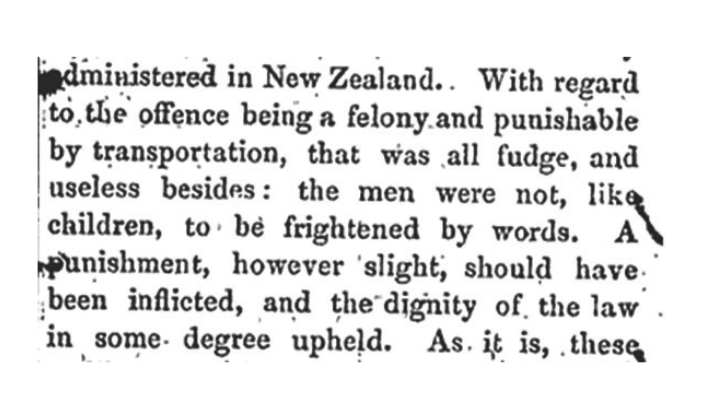
The outcome proved controversial. The workers left court convinced they had avoided punishment because authorities feared the consequences of acting against them.
Critics were scathing, arguing a serious offence had gone unpunished. Some claimed a “new privileged class of road makers” had emerged and that the dignity of the law had been undermined, turning its administration into a mockery.
