
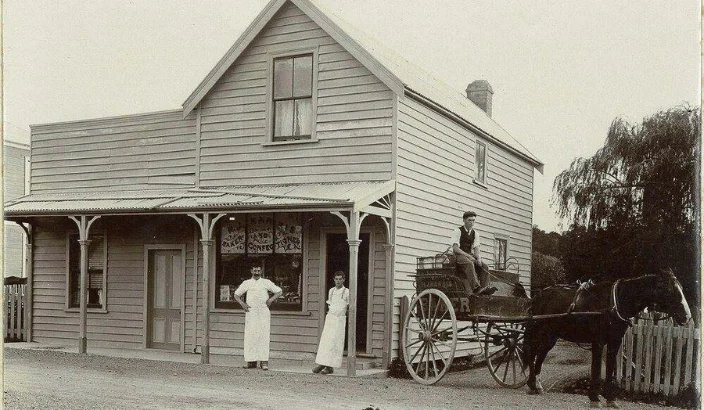
As Brightwater grew into a small but thriving township, demand for local businesses and services increased.
One of the settlement's earliest bakeries was established in late 1877 when Mr Rutherford and Thomas Nelson Newth announced they would begin trading on 22 December. To attract customers, they offered a special four-pound loaf for sixpence.
Mr Holmes was employed as the baker, although the arrangement was short-lived. In February the following year, he took Rutherford and Newth to court over unpaid wages totalling £130.
The partnership between Rutherford and Newth was dissolved in 1880, with Thomas continuing the business alone. Financial difficulties soon followed, however, and he was eventually forced to sell both the property and the bakery. The business was purchased by Mr A. Baigent.
Patronage of Baigent's shop was briefly threatened by an unpleasant mystery in mid-1881, when residents complained about a terrible smell coming from behind the bakery. The Inspector of Nuisances investigated and discovered the odour was not coming from the bakery itself but from a nearby source.
In November 1890, Baigent sold the business to John Rutherford. Under John's ownership, the bakery offered more than everyday bread, advertising wedding, birthday and Christmas cakes, as well as catering for special occasions.
The bakery changed hands again in 1902 when Henry James Harris and Frederick Joseph Playford Stone became the new proprietors. Among their early catering engagements was supplying cakes, buns and sausage rolls for the Motueka Celebrations Committee. They also provided afternoon tea for the Nelson Co-operative Dairy Company Ltd, with all food prepared using the company's Victory brand butter.
The business appeared to be flourishing, and the partners expanded by purchasing Bird's Bakery in Wakefield. Sydney Hickling later joined the venture and the business was renamed the Waimea Baking Company.
The partnership proved short-lived. In August 1904, Stone withdrew from the business, leaving Harris and Hickling in charge. Eight months later, their partnership was also dissolved, and Hickling became the sole owner.
His time in Brightwater was brief, however. When he moved to Eketāhuna in 1905, William Forster purchased the bakery. Within a year, ownership had passed to William's son, Henry.
Henry continued to develop the business, operating a baker's delivery cart and opening a tearoom where refreshments were available "at all hours".
The bakery suffered significant damage in March 1918 when the Wairoa River burst its banks and floodwaters swept through Brightwater. In some parts of the township, water reached two feet deep, with the bakery and E. Fairey's shop among the worst-affected premises.
What happened to the ownership of the bakery after the flood is uncertain. By September 1918, an advertisement placed by J. Flatt, sanitary plumber, stated that Forster was managing the bakery in Brightwater while Mrs J. Payne managed the bakery in Wakefield.
The advertisement suggests that despite the many ownership changes over the preceding decades, the Forster family remained closely connected to the business.
