
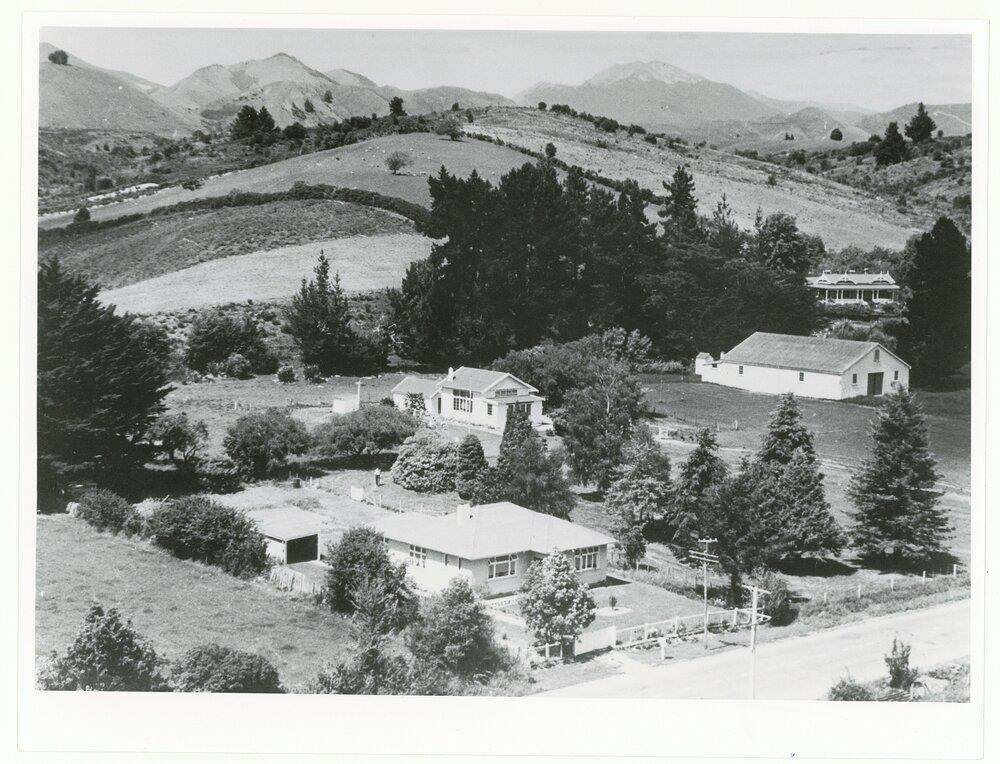
The curious name "Forty-Line", frequently mentioned in early Nelson newspapers, prompted a closer look into the area's history.
Research revealed Forty-Line was a road just south of Brightwater. It gained its name from its location on the southern boundary of Section 40.
Further investigation suggests the road is now Lord Rutherford Road South, which was once the main highway through the district.
The link was uncovered through reports of a bridge on Forty-Line, between Mr Ladley's house and the Spring Grove schoolhouse, being destroyed by fire in 1858. The reconstruction of the Forty-Line Bridge quickly became a contentious issue.
Concerned that traffic would be seriously disrupted unless a replacement was built immediately, Alfred Saunders approached the Superintendent and requested funding for a new bridge. A grant of £50 was approved and the work was completed.
When asked to provide the bridge specifications, Alfred refused and told critics to wait until the bridge was finished and inspect the result before making complaints.
His actions sparked a wave of criticism and counter-criticism over how the project had been handled.
A frustrated E. Baigent called a public meeting in Waimea South to voice concerns that Alfred had taken it upon himself to determine the bridge's cost and design, as well as engage a contractor. Many believed he should have consulted the local road committee to ensure the bridge met the district's needs.
Baigent was particularly unhappy that the local road board had previously petitioned for the bridge but had been told funding was unavailable. Yet money had been granted to a private individual to complete the work, without plans being provided or tenders invited.
He described the situation as an insult to the local board, the public and the Provincial Council, which had passed legislation empowering local boards to oversee local works.
Baigent went so far as to suggest that, since Alfred had taken full responsibility for planning and contracting the bridge, he should pay for it himself.
In 1875, attention was drawn to the dangerous condition of the public highway on Forty-Line. Deep ditches on either side of the road had become clogged with logs, causing horses to shy. On at least one occasion, passengers were thrown from a trap as a result.
With the local school situated on the road, there were fears children travelling to and from school could be injured. However, the Road Board considered filling the ditches too expensive.
By 1888, the bridge was again deteriorating and in need of major repairs or replacement. Residents petitioned for restoration work, but it was not until early 1908 that agreement was reached to replace the structure with a ferro-concrete bridge.
The new bridge opened to traffic in April of that year.
Over time, the name Forty-Line disappeared from common use. At an unknown date, the road was renamed Lord Rutherford Road in honour of Ernest Rutherford.
Once the main road to Wakefield, it lost that status following the opening of the Brightwater deviation in the 1990s.
