
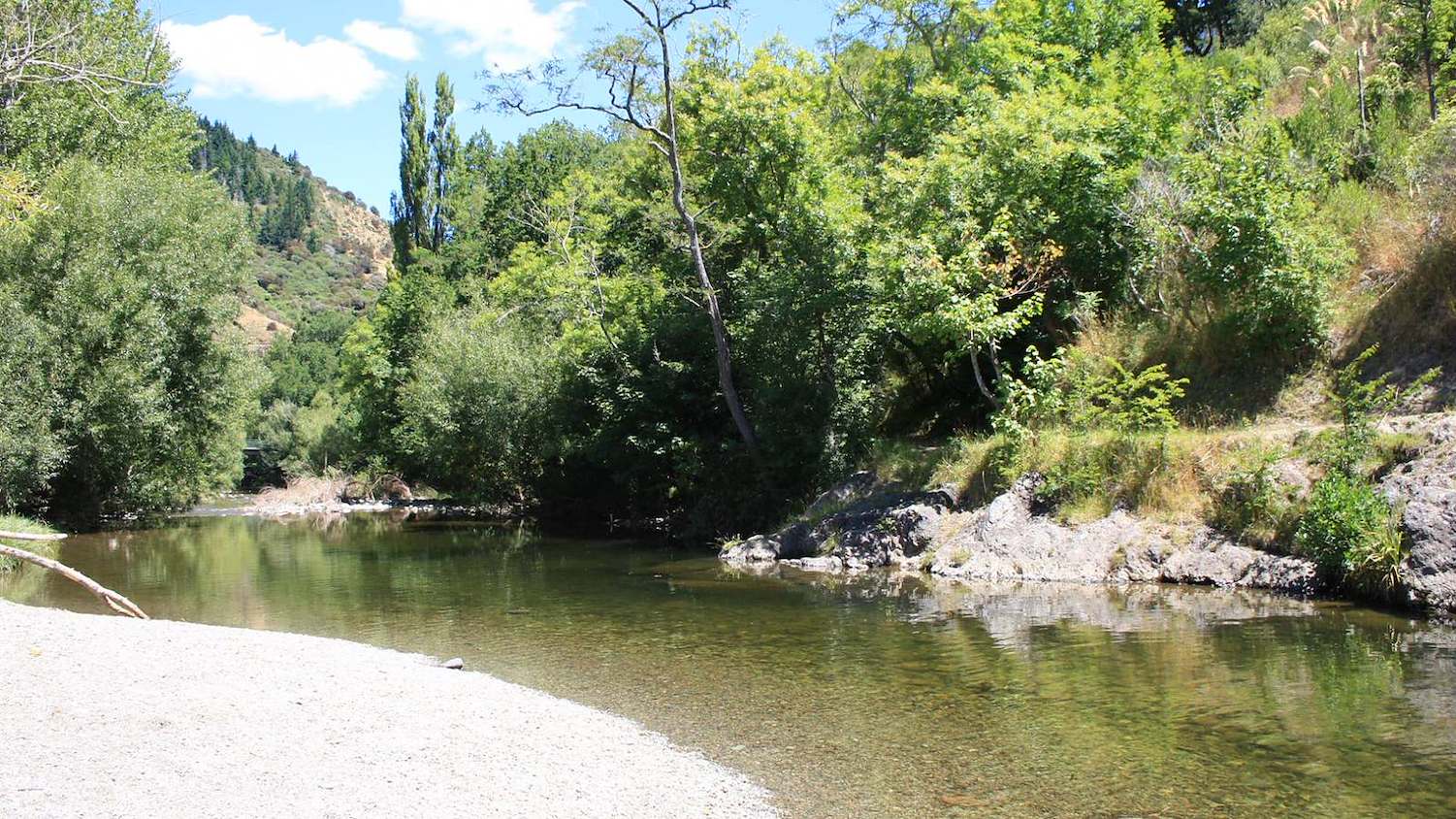
German immigrant John Denne overcame debt, imprisonment and rumour before his name became permanently linked to a beloved Maitai River swimming spot.
Denne’s Hole on the Maitai River has been a popular swimming spot for generations. But how did it get its name?
The answer lies with Johan George Denne, better known as John, who was born in Germany in 1817 and arrived in Nelson in the 1850s. By April 1858, he had established himself in Bridge Street as a cabinetmaker, upholsterer and undertaker.
On 20 October 1860, John married Elizabeth Estcourt, a widow who had arrived in Nelson four years earlier aboard the Emma Colvin with her husband George. Sadly, George died at the Immigration Barracks just four months after the couple arrived. Elizabeth supported herself by running a dress and mantle shop.
The early years of John and Elizabeth’s marriage were difficult, and both became involved in disputes that ended up in court.
In January 1861, Elizabeth was charged with assaulting the son of Anne Waxman. She was bound over to keep the peace, while John was required to enter into a bond to ensure his wife did so.
Later that month, John placed a newspaper notice warning the public that false reports about him and his family were circulating.
Further trouble followed in July 1861 when L. Hargreaves brought a case against John over a debt originally incurred by Elizabeth before their marriage. Elizabeth had engaged Hargreaves to build a house and paid the first instalment but could not meet the remaining payments. She was imprisoned for six months over the debt, and it was after her release that she married John.
Although Elizabeth’s imprisonment had ended, the debt and judgment against her remained. Following their marriage, legal action was brought against both Elizabeth and John.
John’s furniture, tools of trade and the remaining lease on a Bridge Street property were auctioned. He was eventually sentenced to five months in prison because he could not pay the remaining debt.
Lawyers argued the case using different interpretations of the law, but in August 1862 John successfully applied for relief from imprisonment. Once released, he managed to buy back the lease on his property.
John then set about rebuilding his life. By late 1866, he was working in the Maitai Valley, where he operated a flax mill and rope walk. A rope walk was a long, narrow stretch of land where strands were laid out and twisted together by hand to make rope.
In July 1869, John purchased a flax machine from Auckland and installed it beside the Maitai River, where it could be powered by water. This was the area that would later become known as Denne’s Hole.
The couple’s troubles did not disappear entirely. In 1868, John offered a reward for information about a boy who had allegedly delivered an abusive and libellous message to Elizabeth. A later newspaper advertisement seeking evidence of their marriage suggests rumours about the couple may have continued to circulate.
John’s flax business continued for several years. In 1875, after about a decade beside the river, he sold the business and entered a partnership as a cabinetmaker, carpenter, undertaker and furniture dealer.
Although John spent only about 10 years beside the Maitai River, his name became permanently linked to the location.
Denne’s Hole later became known for swimming sports and, sadly, several drownings. The site was also involved in disputes over access between tenants, the Waimea County Council and landowner F. G. Gibbs.
Today, Denne’s Hole remains familiar to many Nelson residents. Its name commemorates a German immigrant who endured financial hardship, imprisonment and personal troubles before establishing the flax and ropemaking works that forever linked his name with the Maitai River.
