
The history of Dehra Doon in Riwaka is intertwined with the stories of two early settler families and the development of horticulture in the district. What began in the 1840s as an extensive property established by surveyor Samuel Stephens eventually became the home of the Thomas family, whose descendants have remained connected with the land for well over 100 years.
Samuel Stephens arrived in Nelson aboard the Whitby, one of the two early expedition ships associated with the establishment of the Nelson settlement. A surveyor by profession, Stephens was appointed principal officer of the New Zealand Company's survey staff soon after his arrival and was responsible for overseeing survey parties working in the Motueka and Riwaka districts.
His wife, Sarah, arrived in Nelson in November 1842. The couple established their home at Riwaka in a pit-sawn house built near a block of native bush.
Samuel's surveying work was completed in late 1843 and he resigned from his position with the New Zealand Company to take up land in Riwaka. There he established an estate he named Knowles Wood.
Samuel died in June 1855 and, following his death, Sarah sold the estate to Mr Rochfort and returned to England. Rochfort's tenure of Knowles Wood lasted only a few years and, by about 1861, he had sold the property to Colonel Charles Thynne Thomas.
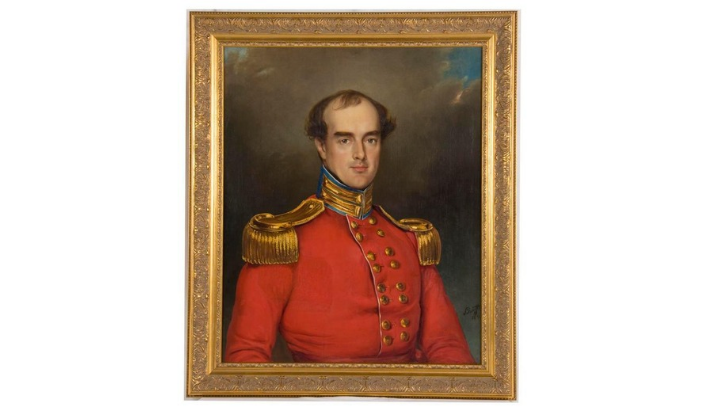
Charles was born in Somerset, England, in 1798, the son of Josiah and Susanna Thomas. He entered a military career and served with Her Majesty's 15th Regiment, eventually attaining the rank of colonel.
While serving in India, Charles married Ann Tovey at Meerut in 1829. The couple went on to have about 11 children, many of whom were born in India between 1830 and 1854. In 1860, Charles, Ann and their children emigrated to New Zealand.
After settling on the property, Charles renamed it Dehra Doon after the Dehradun region of India, a place for which he held great affection. The family initially focused on sheep farming while continuing to develop the large estate.
Charles' time at Dehra Doon was cut short by tragedy. In June 1874, he was killed in an accident in Motueka after being thrown from a cart and subsequently kicked by the horse. He was buried in Riwaka Cemetery.
Following his death, parts of the large property were leased and farmed by various tenants. In August 1876, F. Thomas, a son of Charles, advertised for tenders to lease part of Dehra Doon for a term of seven to 10 years. The following year he auctioned household furniture and livestock before leaving the district.
By early 1883, about 2,800 acres of the Dehra Doon estate were offered for lease. The property continued to be leased over subsequent decades, although the Thomas family retained ownership.
In May 1916, the historic 10-room homestead was destroyed by fire. At the time, it was occupied by members of the family of the late Colonel Thomas.
The estate was later divided into smaller holdings and, in April 1921, 11 lots of the Dehra Doon property were advertised for sale as part of a subdivision.
The story of Dehra Doon did not end with the subdivision of the original estate. The Thomas name has remained part of the old estate through successive generations.
From the early sheep farming days of Charles, the family's relationship with the land grew alongside the agricultural development of the region. Over the generations, the family diversified its farming activities, with horticulture becoming an increasingly important part of both their connection to the land and Riwaka's agricultural heritage.
