
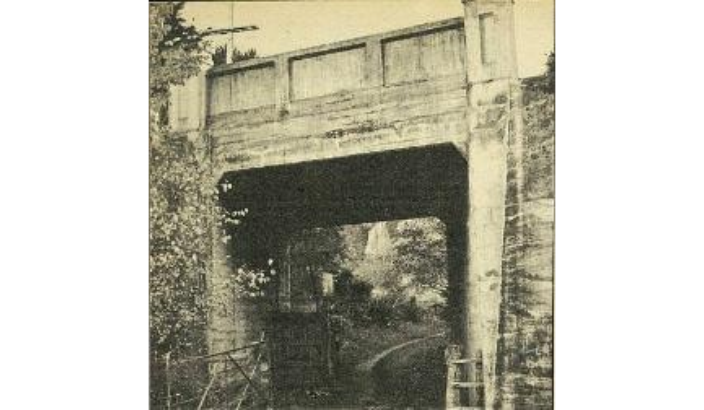
Almost as soon as the Annesbrook railway crossing was constructed, it became a source of concern, earning a reputation as one of the most dangerous crossings in New Zealand. Fatalities and near misses were frequent, and each incident prompted renewed calls for improvements.
In May 1902, four men approached the crossing in a horse-drawn carriage. They saw the lights and heard the rumble of a train but, believing the horses were under control, continued towards the tracks.
As the train approached Quarantine Road, the driver sounded the whistle, startling the horses. The carriage pole struck the second van, dragging the horses onto the line. Both horses were killed, while the passengers escaped injury. The carriage driver, Nathaniel Crisp, was later charged with endangering public safety by driving into a moving train.
Accidents and near misses continued. In 1903, there were three particularly close calls. Eighteen-year-old Rose Hart suffered a fractured leg, a man driving a trap narrowly avoided a collision, and young John Homann was thrown against a bank when his trolley came into contact with an engine.
Public complaints persisted and, in 1914, a report described the crossing as extremely dangerous. It stated that “every person who drives a vehicle or motor bike, or is driven in a vehicle or motor car over the crossing, does so at the peril of his or her life”.
The railway emerged from a cutting directly onto the road, while a surrounding hill obstructed visibility. Even when engine drivers sounded their whistles, road users could not always see or hear an approaching train.
Within days of the report, another near miss occurred. A motorist approached the crossing without seeing or hearing an oncoming train. A nearby resident realised the danger, jumped a fence and stopped the vehicle just a few feet from the tracks. A similar incident happened a month later.
The Minister for Railways subsequently offered to provide warning posts at railway crossings, an offer that was accepted, but no action followed.
Two years later, in March 1916, tragedy struck.
A motor car travelling from Nelson to Motueka carrying F. Hallam, P. Lomax, H. Pine and A. Green collided with a train from Belgrove. The driver again failed to see or hear the approaching train. The car struck a wagon, swerved, and threw its occupants from the vehicle.
Three men were seriously injured. Pine and Green later died, while Lomax lost a leg. Hallam, the driver, was charged under the Railways Act 1913.
The disaster intensified demands for a permanent solution. At a Waimea County Council meeting, the council engineer strongly recommended an overhead bridge. His proposal allowed approaches of one in 20 and estimated the cost at about £1,000.
Councillors could not agree, and the only action was hedges near the crossing being cut back.
The Minister of Railways later confirmed that automatic warning equipment would be installed, but wartime restrictions and shipping difficulties prevented the department from obtaining it.
In June 1916, railway crossing signs were erected 50 yards from the crossing on both approaches.
Other proposals included extending the road along Rocks Road or completely diverting the route, but the preferred option remained an overhead bridge.
Minister of Railways W. Herries agreed to support a bridge provided local authorities contributed half the estimated £2,000 cost. Waimea County Council opposed the proposal and, once again, nothing changed.
Near misses continued. In May 1920, O. Barton escaped serious injury when his car was struck by a train, and three further incidents occurred the following year.
Finally, in April 1921, representatives of local authorities agreed to share the cost of diverting the road and constructing an overhead bridge. Funding would come from Nelson City, Waimea County, Tahunanui and Richmond.
By October, however, the estimated cost had risen to £2,700. Nelson City Council also faced a legal hurdle because it lacked authority to contribute to work beyond the city boundary.
It took another two years to finalise agreements between councils and local bodies, and a further two years before construction began in late 1925.
The long-awaited bridge was completed in 1926, ending more than two decades of debate over one of New Zealand’s most hazardous railway crossings.
