
The Rowling family's journey from early Nelson settlement to fruit-growing success helped shape the Riwaka and Mariri districts.
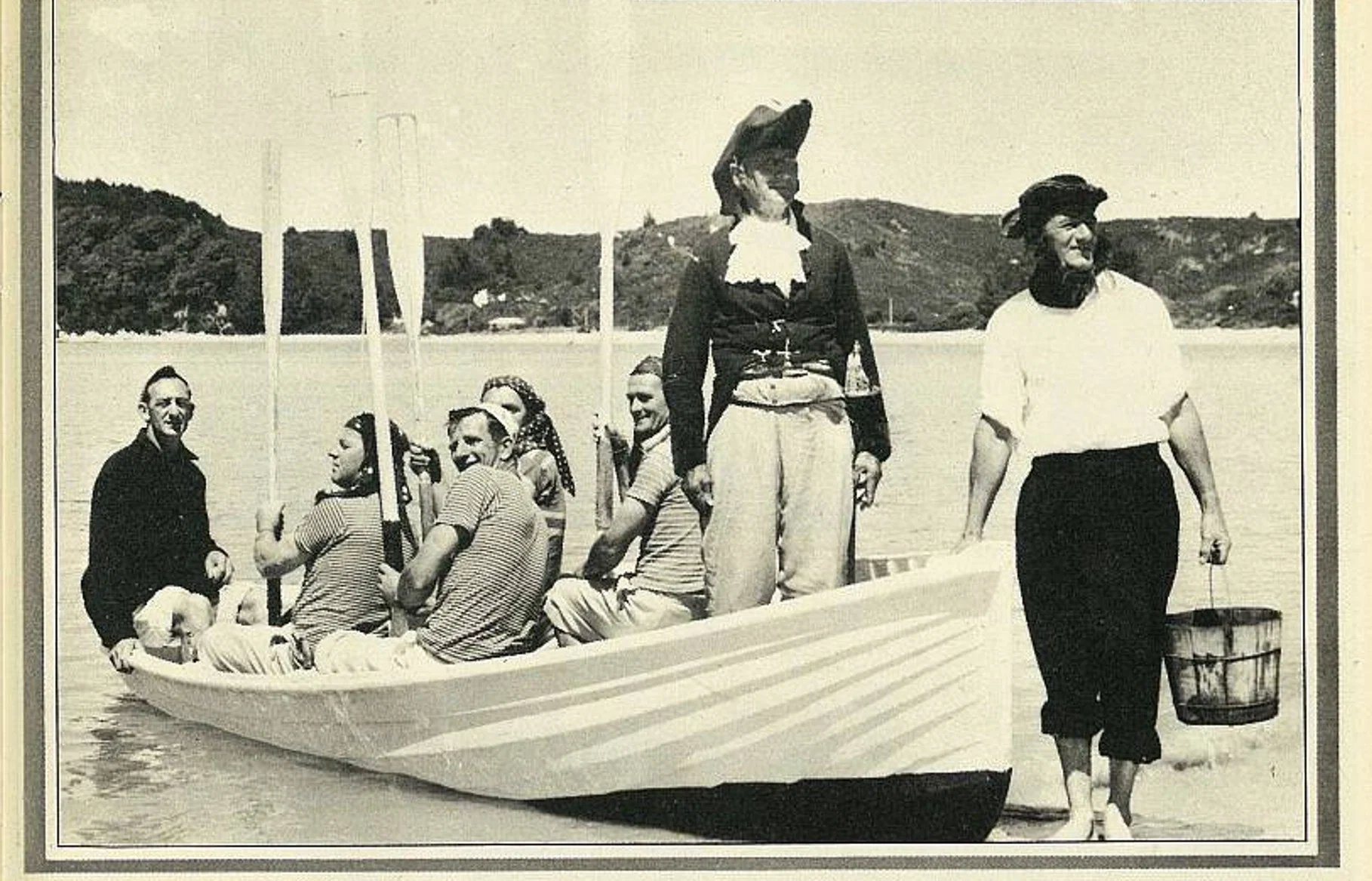
William Rowling was born in Riwaka in 1857, the son of Thomas and Elizabeth Rowling. His father, Thomas, arrived in Nelson aboard the Will Watch and was credited with being the first European settler to step ashore in what became Nelson Province, after being sent to find fresh water at Kaiteriteri by Captain Arthur Wakefield. The achievement earned him the nickname "Hop Ashore Tommy".
Thomas and Elizabeth settled in Riwaka, where they farmed and raised a large family. According to New Zealand births, deaths and marriages records, they had at least 12 children.
The ninth child, William, grew up in Riwaka before moving to Nelson at the age of 18. There, he and his brother Thomas were apprenticed to the blacksmith trade. While in Nelson, William helped make iron plates for the Nelson railway.
William later moved to the West Coast, where he worked as a blacksmith for George Moonlight. On his return to Nelson, he joined his brother in business. In 1881 he married Annie Cummings, daughter of George Cummings.
Soon after their marriage, William and Annie returned to Riwaka, where he continued working as a blacksmith for about 15 years before taking up fruit farming. He remained involved in the industry until retirement.
Throughout his life, William played an active role in community organisations, including the Nelson Fire Brigade, Rifle Club and Foresters' Lodge. He also served on the Riwaka Road Board and the local school committee.
William and Annie had five children: Leonard, Philip Reginald, Elsie, Bertie and Maurice.
Their eldest son, Leonard George Rowling, was born in Riwaka in 1882. From an early age he showed a keen interest in fruit growing. In 1898 and 1899, young Leonard won second place for kitchen apples and pie melons at the Motueka Horticultural Society show.
At 20, Leonard moved to the West Coast and worked at Millerton for three years before spending four years on a sheep farm in the King Country. He later returned to Riwaka and, with his brother, began fruit growing in the Riwaka Valley.
The brothers later cleared a block of gorse at Mariri and transformed it into one of the district's first commercial orchards. Leonard eventually took sole responsibility for the property, continuing to improve it until it became one of the leading orchards in the Mariri district.
He was also involved in community organisations, serving for several years on the Lower Moutere School Committee and as a member of the Fruit Exporters Association.
In 1908, Leonard married Ethel Sarah Brewerton and the couple settled in Mariri. Ethel, born in 1892, was the daughter of George Henry Brewerton and Sarah Elizabeth Chapman.
Together they raised 11 children, five sons and six daughters.
Leonard died on 19 September 1933, aged 52. Ethel lived for another 14 years before her death in February 1947 at the age of 55.
