
Read part 1 here
Plans for a new Nelson asylum took shape in the 1870s after Messrs Beatson and Belcher of Wellington won the bid to design a substantial new building to house the region’s growing number of patients.
The proposed asylum featured a frontage of 308 feet and a depth of 132 feet, with capacity for 62 inmates, expandable to accommodate up to 90. The central portion was two storeys high, with the ground floor devoted to waiting rooms, dining halls, the kitchen and offices for warders and matrons. The upper storey housed sitting rooms and bedrooms for those in charge.
Two wings extended from the central block, one for male patients and the other for female patients.
The new asylum opened in May 1876, with Captain Heffer appointed superintendent following the dismissal of Butler. Heffer’s tenure was short-lived and he died suddenly in October 1879. He was replaced by W. Mills, who was well liked and known for his affinity with the patients in his care. Mills frequently introduced measures to improve their lives.
Tragedy struck in May 1885 when Mills’ wife died aged 36. Only weeks later, in July, Mills himself died at the age of 39.
By the end of 1885 there were about 100 patients under the care of the new superintendent, George White. White spent three years at the asylum before leaving for Wellington in 1889. Shortly after, he was remanded back to Nelson on charges of embezzlement of Government money. He was found guilty and sentenced to two years’ hard labour.
James Morrison then assumed control of the asylum. Alterations were carried out in April 1896 to provide additional accommodation, at a cost of £1000. Morrison retired in late 1904 and was replaced by George Chapman, who had previously been head attendant at Sunnyside.
Although the institution was officially renamed Nelson Mental Hospital in 1912, the name had been in common use for several years. New additions were completed in the latter part of 1908, including the repurposing of the old Toi Toi School, which was relocated to the rear of the hospital. This created space for another 50 to 60 patients.
Patient numbers continued to rise, with 45 people transferred to Nelson from the Mount View and Porirua mental hospitals. By 1909 the institution housed 145 patients.
The record for superintendents was troubling. Two had been dismissed, one imprisoned for embezzlement and two had died while in office. In January 1911 superintendent George Chapman also died suddenly, from heart failure.
Local doctor W. J. MacKay was appointed with sole charge of the hospital and remained in the role for three years before retiring in 1914. Several changes followed over the next few years, with Dr Jefferies, Dr Hassell and Dr McKillop each holding the position.
Ongoing issues with ageing buildings prompted discussions in 1919 about relocating the hospital to a more suitable site away from the city.
By the end of 1921 rumours circulated that the boys’ training farm in Ngawhatu Valley would be converted into a mental hospital, sparking concern among residents who feared it would depreciate property values.
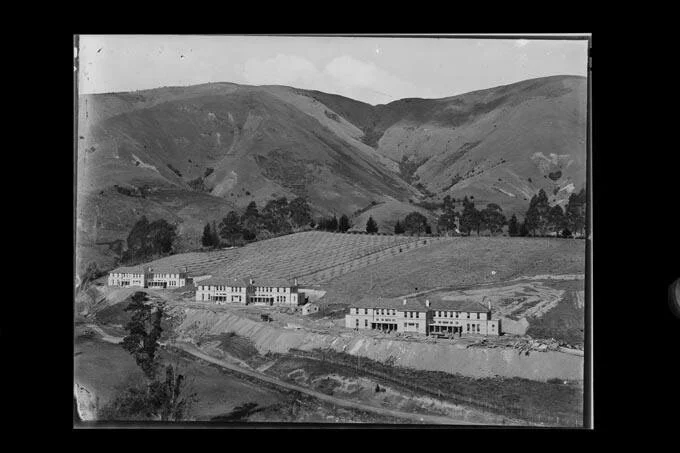
In November it was confirmed that the buildings and land of the Stoke Orphanage and boys’ training school had been acquired to establish a villa system mental hospital, with Dr Theo Gray appointed superintendent.
The original Nelson asylum buildings were retained and used to house some older men and children with intellectual disabilities, eventually becoming Braemar Hospital.
The main group of 114 men were transferred to the new hospital, with about 70 engaged in outdoor work on the farm or in the gardens. Twenty-nine men considered too feeble and deranged lived in a closed villa.
As attitudes towards mental health and disability evolved, plans were made in the 1990s to close the hospital. The closure was completed about 2000, and in 2001 the hospital and land were sold.
